
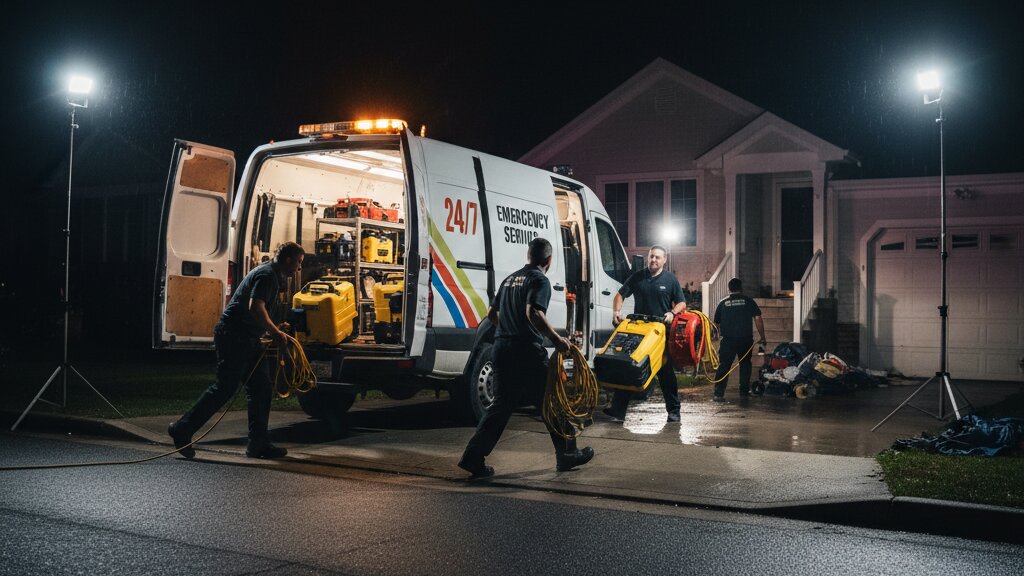
The Critical Timeline of Property Damage
Different types of damage progress at different rates, but all share one characteristic: they worsen over time. Understanding these timelines emphasizes why emergency restoration response cannot wait. Disaster response time directly impacts whether property can be fully restored or requires extensive replacement.
| Time After Incident | Water Damage Progression | Fire/Smoke Progression |
|---|---|---|
| 0-1 Hours | Water spreads across floors, begins absorption into porous materials | Smoke residue begins bonding to surfaces, odor penetrates fabrics |
| 1-4 Hours | Drywall wicks moisture upward, wood flooring begins absorbing | Acidic soot causes permanent etching on metals, discoloration sets |
| 4-24 Hours | Furniture finishes swell and warp, carpet pad saturates completely | Smoke penetrates wall cavities, restoration costs increase significantly |
| 24-48 Hours | Mold begins germinating, musty odors develop, structural damage accelerates | Permanent staining on porous surfaces, corrosion damage to electronics |
| 48+ Hours | Active mold growth, severe structural concerns, extensive material removal required | Restoration becomes significantly more complex and expensive |
Water Damage Timeline
Water damage begins the moment water contacts building materials. Within the first hour, water spreads across hard surfaces and begins penetrating porous materials. Professional water extraction services during this window can prevent most absorption damage. This is why 24-hour emergency services are critical for immediate response regardless of when disasters strike.
Between 1-24 hours, water migrates deep into structural materials through capillary action. Drywall wicks moisture 12-24 inches above visible waterlines. Subfloor materials begin absorbing water that has penetrated carpet and pad. Each hour of delay increases the volume of affected materials requiring drying or removal. Rapid damage mitigation during this timeframe is essential to prevent extensive repairs.
The 24-48 hour window marks a critical threshold. Mold spores, present in all environments, require only moisture and organic material to germinate. Once mold begins growing, water damage restoration expands to include mold remediation—a significantly more complex and costly process. Emergency restoration response within the first 24 hours significantly reduces mold risk.
Warning: Standing water in contact with electrical systems, gas appliances, or structural elements creates immediate safety hazards beyond property damage. Emergency response addresses these dangers alongside restoration needs.
Fire and Smoke Damage Timeline
Smoke and soot cause ongoing damage long after flames are extinguished. The acidic compounds in smoke residue react with surfaces continuously, causing progressive deterioration. Fire and smoke damage restoration that begins within hours preserves materials that delay renders unsalvageable.
Within the first hour, smoke residue begins settling on surfaces throughout affected areas. This residue remains relatively easy to clean during the initial window. By 4-24 hours, acidic compounds have begun chemical reactions that etch glass, corrode metals, and permanently stain porous materials.
Smoke penetration into wall cavities, HVAC systems, and hidden spaces occurs within the first 24-48 hours. Once smoke infiltrates these areas, restoration requires accessing hidden spaces rather than simply cleaning visible surfaces. Disaster response time directly affects scope complexity and restoration costs.
What Emergency Restoration Response Includes
Professional emergency restoration response goes far beyond simply arriving quickly. Emergency restoration teams bring equipment, expertise, and protocols necessary for rapid damage mitigation.
Initial Assessment
Upon arrival, restoration professionals conduct rapid assessment identifying:
- Immediate safety hazards requiring attention
- Damage source and whether it’s controlled
- Affected areas and materials
- Priority actions for damage mitigation
- Equipment and resource requirements
This assessment typically occurs within the first 15-30 minutes, enabling immediate mitigation efforts while planning comprehensive restoration. A thorough emergency restoration response begins with this critical assessment phase.
Emergency Mitigation
Mitigation focuses on stopping ongoing damage and preventing additional harm through rapid damage mitigation protocols. Specific actions depend on damage type:
Water Emergencies:
- Source identification and water shutoff if still flowing
- Standing water extraction using truck-mounted or portable equipment
- Content elevation and protection
- Initial drying equipment deployment
- Contamination assessment and safety protocols
Fire and Smoke Emergencies:
- Ventilation to reduce smoke concentration
- Surface pre-cleaning to halt acidic damage progression
- Electronics isolation and protection
- Content removal from heavily damaged areas
- Board-up and tarping for structural openings
Property Securing
Damaged properties often require securing against weather, unauthorized entry, or additional hazards. Board-up services protect properties with broken windows, doors, or structural openings. Emergency tarping covers roof damage before weather causes additional harm.
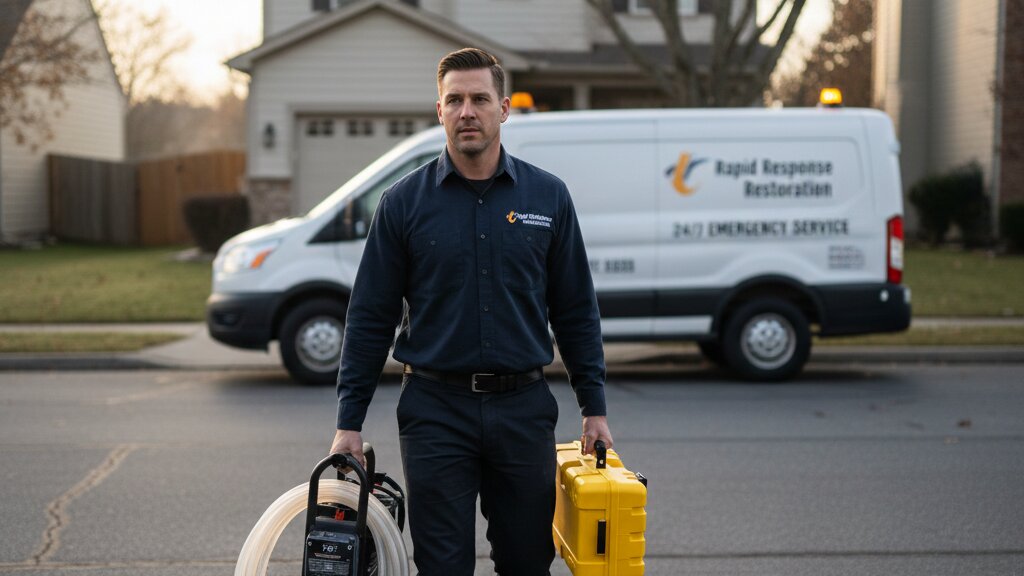
Why 24/7 Availability Matters
Property emergencies occur at all hours. Pipes burst at 2 AM. Fires happen on holidays. Storms strike overnight. Restoration companies offering true 24-hour emergency services provide critical advantages over those with limited availability.
After-Hours Response Reality
Consider a pipe burst at 11 PM. With 24-hour emergency services, response can begin within 1-2 hours. Extraction starts before midnight, and drying equipment operates through the night. By morning, significant mitigation has occurred.
Without after-hours response, that same pipe burst sits until business hours—8+ hours of continued water spread, absorption, and damage. Materials that could have been saved may now require removal. Mold risk increases dramatically.
Weekend and Holiday Response
Disasters don’t check calendars. Professional emergency restoration response maintains full capability on weekends and holidays. This availability prevents the multi-day delays that turn moderate damage into major losses.
Pro Tip: When evaluating restoration companies before an emergency, verify their actual after-hours response capability. Some advertise 24/7 service but route calls to answering services with delayed dispatch. Ask specifically about response times during nights, weekends, and holidays.
Response Time Standards in the Industry
Professional restoration industry standards establish disaster response time expectations that quality providers meet consistently.
| Response Stage | Industry Standard | What Should Happen |
|---|---|---|
| Initial Contact | Immediate to 15 minutes | Live answer or rapid callback, emergency assessment begins |
| Dispatch | Within 30 minutes | Crew and equipment assigned, departure for property |
| On-Site Arrival | 1-2 hours (varies by location) | Crew arrives with equipment for immediate mitigation |
| Mitigation Begins | Within 30 minutes of arrival | Active damage mitigation underway |
Geographic factors affect on-site arrival times. Urban and suburban properties typically see faster response than rural locations. However, professional restoration companies serving specific regions maintain resources positioned for efficient coverage throughout their service areas. Optimizing emergency restoration response requires strategic resource positioning.
Factors Affecting Response Time
Several factors influence how quickly 24-hour emergency services can reach affected properties.
Weather Events and Demand Surges
Major storms, widespread flooding, or regional disasters create surge demand that challenges even well-prepared restoration companies. During these events, response times may extend as crews work multiple emergencies. Professional companies prioritize by severity and manage resources to serve all affected customers.
Property Location and Access
Distance from restoration facilities affects travel time. Access challenges—gated communities, secured buildings, remote locations—may require additional coordination. Having property access information readily available speeds arrival once crews dispatch.
Scope of Emergency
Complex emergencies requiring specialized equipment or multiple crews may take longer to mobilize than straightforward situations. Initial phone assessment helps restoration companies dispatch appropriate resources immediately rather than requiring additional trips.
What Property Owners Should Do While Waiting
The period between emergency discovery and professional arrival offers opportunities for damage-limiting action—and potential for mistakes that complicate restoration. Taking appropriate steps supports rapid damage mitigation once professionals arrive.
Recommended Actions
- Ensure safety first—evacuate if necessary, avoid electrical hazards in water situations
- Stop the source if safely possible—shut off water main for plumbing failures
- Document damage—photograph affected areas for insurance purposes
- Elevate valuables—move items off wet floors if safe to do so
- Improve ventilation—open windows in smoke situations (weather permitting)
- Gather information—note when damage was discovered, what happened, affected areas
Actions to Avoid
- Don’t use household vacuums on water—they’re not designed for water extraction and create electrical hazards
- Don’t enter structurally compromised areas—wait for professional assessment
- Don’t turn on HVAC systems—this can spread smoke or mold throughout the building
- Don’t attempt cleaning with household products—wrong products can set stains or cause additional damage
- Don’t dispose of damaged items before documentation—insurance requires evidence
Choosing Emergency Restoration Services
Selecting restoration services during an emergency leaves little time for research. Identifying qualified providers before emergencies occur enables confident, rapid decisions when disasters strike. Evaluating emergency restoration response capabilities beforehand ensures you have trusted partners ready.
Key Selection Criteria
True 24/7 Response: Verify live dispatching capability at all hours, not just answering services. Ask about actual response times during off-hours emergencies. Genuine 24-hour emergency services require dedicated staff and equipment ready around the clock.
Local Presence: Companies with local facilities respond faster than those dispatching from distant locations. Regional presence ensures familiarity with local conditions and building types.
Certifications and Training: IICRC certification indicates adherence to industry standards and proper training. Verify current certifications before emergencies occur.
Insurance Relationships: Established relationships with insurance companies streamline claims processing during stressful emergency situations.
Comprehensive Services: Full-service restoration companies handle all aspects of recovery, from emergency restoration response through complete restoration, without requiring multiple contractors.
The Cost of Delayed Response
Emergency restoration involves costs that property owners naturally want to minimize. However, delayed response almost always increases total costs rather than saving money.
Direct Cost Increases
As damage progresses, more materials require treatment or replacement. Water that could have been extracted in hour one has absorbed into materials requiring removal by hour 24. Smoke damage that could have been cleaned becomes permanent staining requiring replacement.
Secondary Damage Costs
Delayed response allows secondary damage that wouldn’t occur with rapid damage mitigation. Mold remediation adds significant expense to water damage restoration. Structural damage from prolonged water exposure requires repairs beyond original damage scope.
Business Interruption
For commercial properties, every day of closure represents lost revenue. Rapid response and efficient restoration minimize business interruption costs that can exceed physical damage costs.
Frequently Asked Questions About Emergency Restoration Response
How quickly should I call for emergency restoration services?
+
Call immediately upon discovering damage. Even if you’re unsure about the severity, professional assessment costs nothing and determines whether emergency response is warranted. Waiting to “see how bad it is” allows damage to progress unnecessarily.
What information should I have ready when calling?
+
Helpful information includes: property address and access instructions, type of damage (water, fire, etc.), when damage was discovered or occurred, approximate affected area, whether the source is controlled, and any safety concerns. Don’t delay calling to gather information—provide what you know and add details later.
Should I wait for my insurance company before calling restoration services?
+
No. Insurance policies typically require property owners to mitigate damage—meaning you must take reasonable steps to prevent additional damage. Call restoration services immediately, then notify insurance. Professional restoration companies document everything for insurance purposes and often communicate directly with adjusters.
What if restoration services can’t arrive immediately due to a major storm?
+
During major events, take safe mitigation steps while awaiting arrival. Remove standing water if safe, elevate belongings, and document damage. Reputable restoration companies prioritize by severity and provide phone guidance for interim measures. Communicate your situation’s urgency clearly.
Are emergency response services available on holidays?
+
Yes, professional restoration companies offering true 24/7 service maintain holiday coverage. Emergencies don’t observe holidays, and neither do quality restoration providers. When researching companies in advance, confirm holiday response capability specifically.
How can I prepare for faster emergency response?
+
Research and save contact information for qualified restoration companies before emergencies. Know your water main shutoff location. Keep insurance policy information accessible. Establish relationships with restoration companies that offer priority response for existing contacts. Preparation enables faster action when emergencies occur.
Rapid Response Restoration Services
Emergency restoration response time directly determines damage extent, restoration complexity, and recovery costs. Rapid professional response prevents secondary damage, preserves salvageable materials, and restores properties more completely than delayed treatment allows.
When emergencies affect properties in Northern New Jersey, Pennsylvania’s Capital Region, New York’s Hudson Valley, Connecticut’s Capital Region, or the South Jersey Shore, 24-hour emergency services teams stand ready to begin mitigation within hours—not days—protecting properties from ongoing damage every minute counts.