
Structural Drying – How Water Affects Building Materials
Different building materials absorb and hold water differently, affecting both damage potential and drying requirements. Professional water cleanup and extraction services address these variations through material-specific approaches.
| Material Type | Absorption Characteristics | Drying Considerations |
|---|---|---|
| Drywall | Highly absorbent, wicks water upward via capillary action | May require removal if saturation exceeds 24 inches; remaining sections need wall cavity drying |
| Wood Framing | Absorbs slowly but retains moisture deep in grain | Extended drying times; moisture meters verify internal dryness |
| Concrete | Porous surface absorbs water; dense interior slows penetration | Surface dries quickly but subsurface moisture requires extended treatment |
| Carpet and Pad | Pad absorbs significantly more than carpet fibers | Often requires pad removal; carpet can be dried in place if acted upon quickly |
| Hardwood Flooring | Absorbs through edges and gaps; swells and cups | Controlled slow drying prevents permanent warping; may require weighted drying |
| Insulation | Fiberglass holds water between fibers; cellulose absorbs heavily | Wet insulation typically requires replacement |
Capillary Action and Wicking
Water doesn’t stay where it lands. Capillary action pulls water through porous materials against gravity, spreading contamination far beyond initial contact areas. Drywall commonly wicks water 12-24 inches above visible waterlines. Wood framing and structural sheathing experience similar wicking effects.
This wicking action explains why water damage restoration professionals treat areas well beyond visible wet zones. Moisture detection equipment identifies the true extent of water migration, ensuring complete drying coverage.
Moisture Equilibrium
Building materials naturally seek equilibrium with surrounding air humidity. Wet materials release moisture into the air until reaching balance. Dry air accelerates this moisture release, while humid air slows or stops it entirely. Professional structural drying manipulates these conditions to maximize moisture removal rates.
The Science of Psychrometrics in Drying
Psychrometrics—the science of air-water vapor mixtures—forms the foundation of professional structural drying. Understanding these principles explains why specific equipment combinations and environmental controls prove essential.
Key Psychrometric Concepts
Relative Humidity (RH): The percentage of moisture air contains relative to its maximum capacity at current temperature. Lower RH creates greater drying potential as materials release moisture into drier air.
Temperature Effects: Warmer air holds more moisture than cooler air. Raising temperature while controlling humidity increases drying capacity. However, excessive heat can damage materials and promote microbial growth.
Dew Point: The temperature at which air becomes saturated and moisture condenses. Maintaining conditions above dew point prevents secondary water damage from condensation on cold surfaces.
Vapor Pressure: Moisture moves from areas of high vapor pressure (wet materials) to low vapor pressure (dry air). Professional drying maintains low vapor pressure in surrounding air, maximizing moisture extraction from materials.
Grain Depression
Professional restorers measure drying conditions using grains per pound (GPP)—the actual moisture content of air. Grain depression refers to the difference between ambient outdoor GPP and the lower GPP maintained in the drying environment. Greater grain depression accelerates structural drying.
Effective water damage restoration typically maintains 40-50+ grains of depression. This requires dehumidification equipment sized appropriately for space volume and moisture load.
Professional Structural Drying Equipment
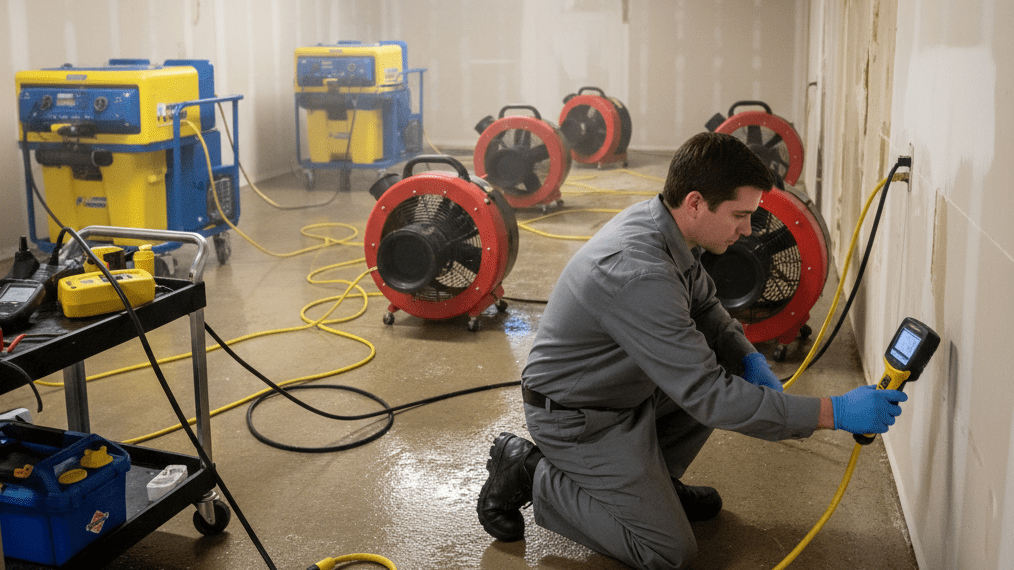
Structural drying requires specialized equipment working together as an integrated system. Each component serves specific functions in the drying process.
Air Movers
High-velocity air movers accelerate evaporation from wet surfaces. These units direct concentrated airflow across materials, disrupting the boundary layer of humid air that naturally forms above wet surfaces. This boundary layer disruption dramatically increases evaporation rates.
Professional drying typically deploys one air mover per 10-16 square feet of affected flooring, with additional units directed at wet walls and other surfaces. Positioning matters significantly—improper placement creates dead zones where moisture remains trapped.
Dehumidifiers
Dehumidifiers remove moisture from air, maintaining the low humidity necessary for continued material drying. Two primary types serve structural drying applications:
- Refrigerant Dehumidifiers: Cool air below dew point, condensing moisture for removal. Most effective in moderate temperatures (70-90°F) and humidity levels.
- Desiccant Dehumidifiers: Use moisture-absorbing materials to extract humidity. Effective across wider temperature ranges, particularly in cooler conditions where refrigerant units lose efficiency.
Equipment selection depends on environmental conditions, space characteristics, and moisture load. Large losses often require multiple dehumidifiers working continuously.
Specialty Drying Systems
Injectidry Systems: Force dry air into wall cavities, ceilings, and other enclosed spaces that surface drying can’t reach. These systems use ports or vents connected to drying panels, creating positive pressure that pushes moisture out of hidden areas.
Hardwood Floor Drying Mats: Specialized systems that dry hardwood from above while controlling the drying rate. Too-rapid drying causes permanent cupping and splitting; these systems extract moisture gradually while maintaining even drying across the floor surface.
Heat Drying Systems: Controlled heating accelerates drying in appropriate situations. These systems carefully balance temperature increases with humidity control to prevent damage while speeding moisture removal.
The Professional Structural Drying Process
Professional water damage restoration follows systematic protocols ensuring complete, verified drying. This structured approach prevents the problems that result from incomplete moisture removal.
Initial Assessment and Documentation
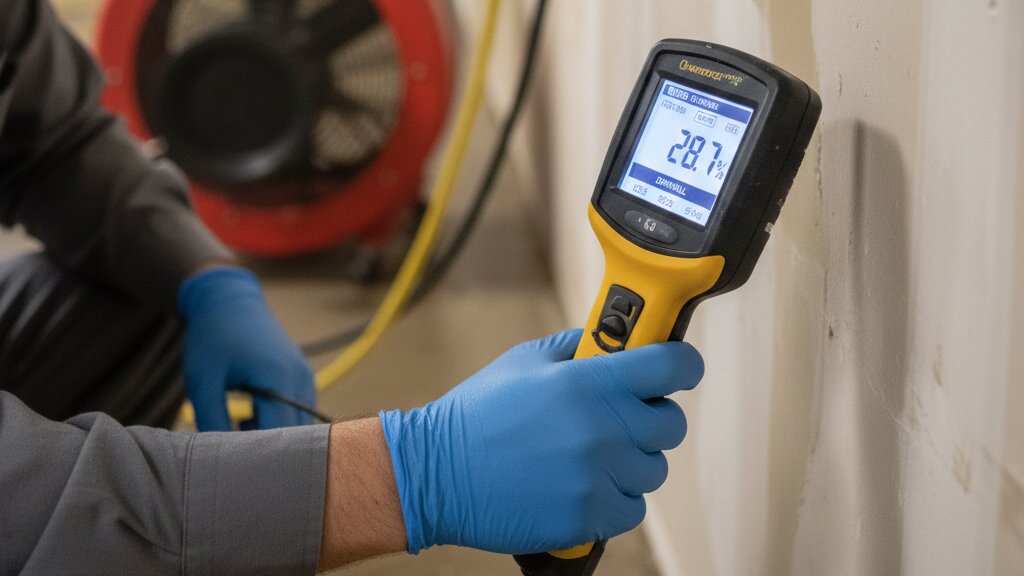
Restoration technicians begin with comprehensive moisture mapping using specialized detection equipment. This assessment identifies:
- All affected materials and areas
- Moisture levels in different materials
- Water source and contamination category
- Structural concerns requiring attention
- Contents requiring protection or removal
Documentation establishes baseline moisture readings against which drying progress is measured. Thermal imaging and moisture meters create detailed maps of water intrusion patterns.
Water Extraction
Before drying begins, standing water and extractable moisture must be removed. Truck-mounted and portable extraction equipment removes hundreds of gallons per hour from flooded spaces. Extraction removes far more water far faster than evaporation alone.
Pro Tip: Every gallon extracted is a gallon that doesn’t require evaporation and dehumidification. Thorough extraction significantly reduces total drying time and equipment requirements.
Controlled Demolition
Some water-damaged materials cannot be effectively dried in place. Saturated insulation, heavily soaked drywall sections, and contaminated materials require removal. Controlled demolition removes these materials while preserving salvageable sections.
For wall drying, technicians often create flood cuts—removing drywall to a uniform height above moisture migration limits. This exposes wall cavities for drying while preserving upper wall sections that remain dry.
Equipment Placement and Environmental Control
Based on assessment findings, technicians calculate equipment requirements and optimal placement. This includes:
- Air mover quantity and positioning for complete coverage
- Dehumidifier capacity matched to space volume and moisture load
- Specialty equipment for wall cavities, floors, or other specific needs
- HVAC isolation or integration depending on system type and conditions
The affected area becomes a controlled drying chamber with conditions optimized for moisture removal.
Monitoring and Adjustment
Structural drying isn’t set-and-forget. Technicians return daily (or more frequently for severe losses) to monitor progress and adjust equipment. Monitoring includes:
- Moisture readings in affected materials
- Environmental conditions (temperature, humidity, GPP)
- Equipment operation verification
- Drying progress compared to expected rates
When drying stalls or proceeds slower than expected, technicians identify causes and adjust approaches. This might involve adding equipment, repositioning air movers, or addressing hidden moisture reservoirs.
Verification and Documentation
Drying is complete when materials reach acceptable moisture content—not when surfaces feel dry. Professional verification compares final moisture readings against established dry standards for each material type and regional climate norms.
Complete documentation provides evidence of proper drying for insurance purposes and future reference. This documentation proves particularly valuable if moisture-related problems develop later, demonstrating that professional protocols were followed.
Why DIY Drying Often Fails
Property owners sometimes attempt water damage drying with rental equipment or household fans. While understandable, this approach frequently leads to incomplete drying and subsequent problems.
Common DIY Drying Mistakes
Insufficient Equipment: Household fans and small dehumidifiers cannot create conditions necessary for structural drying. Professional equipment operates at scales and efficiencies that consumer products cannot match.
Surface-Only Drying: Without proper equipment and technique, only surfaces dry while moisture remains trapped in wall cavities, subfloors, and other hidden areas. This trapped moisture fuels mold growth and causes ongoing deterioration.
Premature Termination: Surfaces may feel dry while materials remain wet inside. Without moisture meters and monitoring protocols, DIY drying typically stops well before materials actually reach safe moisture levels.
Improper Equipment Placement: Even with adequate equipment, improper positioning leaves areas inadequately treated. Professional training covers airflow patterns, equipment spacing, and strategic placement for complete coverage.
Warning: Mold can begin growing within 24-48 hours in wet conditions. Incomplete drying creates ideal mold environments hidden behind walls and under floors, leading to health hazards and extensive remediation costs later.
Factors Affecting Structural Drying Time
Complete structural drying typically requires 3-5 days for moderate water damage, though several factors influence actual timelines:
| Factor | Impact on Drying Time |
|---|---|
| Water Volume | Greater moisture loads require longer extraction and drying periods |
| Material Types | Dense materials (hardwood, concrete) dry slower than porous materials |
| Penetration Depth | Water reaching subfloors, wall cavities, and structural elements extends drying |
| Building Construction | Multiple layers, vapor barriers, and enclosed cavities complicate drying |
| Environmental Conditions | High ambient humidity, cool temperatures slow the process |
| Response Time | Delayed response allows deeper penetration and secondary damage |
| Equipment Availability | Adequate equipment matching the loss speeds completion |
Special Structural Drying Challenges
Certain situations present unique drying challenges requiring specialized approaches from experienced emergency restoration services.
Concrete Slab Drying
Water under or within concrete slabs presents significant challenges. Concrete’s density slows both water penetration and moisture release. Slab drying may require specialized surface drying systems, extended treatment periods, and careful monitoring to prevent moisture-related flooring failures after restoration.
Multi-Story Water Migration
Water from upper floors travels through building systems, affecting multiple levels and creating widely distributed damage. These losses require coordinated drying across all affected areas, with attention to vertical moisture pathways.
Finished Basements
Below-grade spaces with finished walls and flooring present complex drying scenarios. Limited access, potential ongoing moisture intrusion, and hidden water pathways between foundation walls and finished surfaces require careful assessment and specialized drying approaches.
Commercial Building Systems
Large commercial spaces with extensive HVAC systems, multiple building zones, and varied occupancy requirements demand coordinated commercial restoration approaches. Drying must consider building operations, tenant needs, and system interactions.
Frequently Asked Questions About Structural Drying
How do professionals know when structural drying is complete?
+
Professional restorers use moisture meters to measure moisture content within materials, not just surface conditions. Drying is complete when readings fall within acceptable ranges for each material type, typically matching or approaching dry standard references. This scientific verification ensures hidden moisture doesn’t remain to cause problems later.
Can I speed up structural drying by turning up the heat?
+
While moderate heat assists drying, simply raising temperature without proper dehumidification and airflow creates problems. Excessive heat can damage materials and accelerate mold growth. Professional drying balances temperature, humidity, and airflow based on psychrometric principles for optimal, safe drying.
Why does the restoration company need to come back every day?
+
Daily monitoring tracks drying progress, verifies equipment operation, and identifies issues requiring adjustment. Conditions change as drying progresses, and equipment positioning may need modification. This monitoring ensures complete drying within optimal timeframes and provides documentation for insurance purposes.
What happens if structural drying isn’t done properly?
+
Incomplete drying leads to serious consequences including mold growth, wood rot, structural deterioration, and persistent odors. These secondary damages often exceed original water damage costs and may not be covered by insurance if improper drying is documented. Professional drying prevents these expensive, health-threatening outcomes.
Should I open windows during structural drying?
+
Generally no. Professional drying creates controlled conditions with specific temperature and humidity levels. Opening windows introduces uncontrolled outside air that typically works against drying goals, especially in humid weather. Keep windows closed and let the professional drying system work as designed.
How much does professional structural drying cost?
+
Structural drying costs vary based on affected area size, equipment requirements, drying duration, and complexity factors. Most homeowner insurance policies cover professional water damage restoration. Restoration companies typically work directly with insurance adjusters to document damage and justify necessary services.
Professional Structural Drying Services
Effective structural drying combines scientific understanding with professional equipment and experienced technicians. This expertise ensures complete moisture removal that prevents secondary damage while restoring properties efficiently.
When water damage affects properties in Northern New Jersey, Pennsylvania’s Capital Region, New York’s Hudson Valley, Connecticut’s Capital Region, or the South Jersey Shore, certified restoration professionals apply proven structural drying science to protect buildings and contents from water’s destructive effects.