
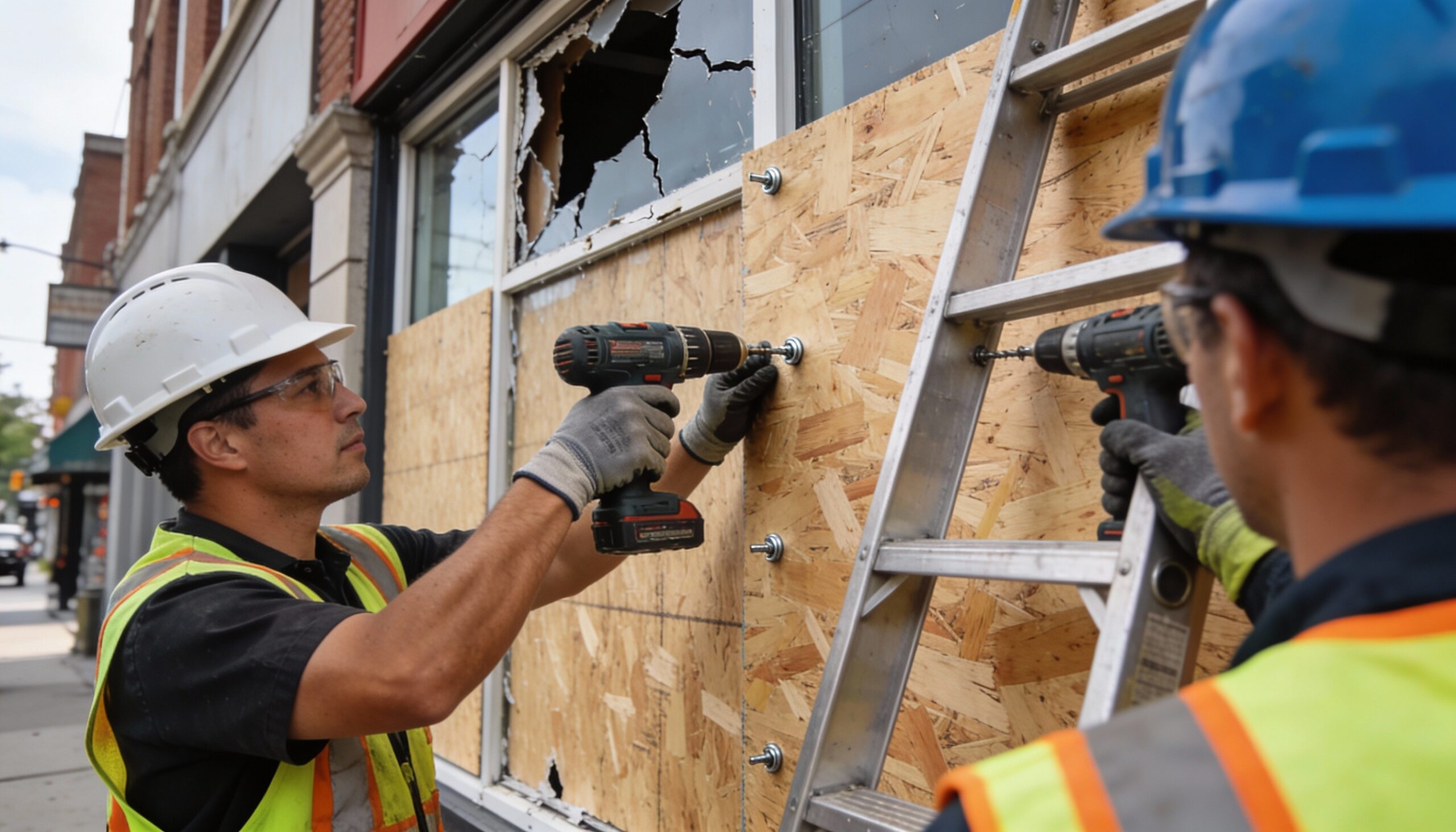
Why Emergency Property Board-Up Services Are Critical
Damaged properties with unsecured openings face compounding losses that can exceed initial damage. Board-up prevents these secondary losses while creating safe conditions for damage assessment and restoration work.
Weather Protection
Broken windows, damaged doors, and roof penetrations allow weather to enter structures, causing additional damage to interiors, furnishings, and building materials. Rain entering through storm-damaged roofs can cause extensive water damage throughout the structure. Cold weather through broken windows can freeze pipes, creating additional emergency situations.
Immediate board-up prevents weather damage that would otherwise continue until permanent repairs complete. This protection is especially critical when restoration timelines extend beyond immediate weather threats.
Security
Open buildings attract theft and vandalism. Criminals specifically target damaged properties knowing occupants may be displaced and security compromised. Copper pipe, electrical wire, appliances, and personal belongings face theft risk in unsecured damaged buildings.
Professional board-up creates physical security barriers deterring opportunistic theft. Visible boarding also signals that property is being monitored, reducing targeting likelihood.
Safety
Unsecured openings create hazards for both authorized persons and trespassers. Sharp glass, unstable materials, and structural hazards near openings pose injury risk. Children, animals, and unauthorized persons entering damaged buildings face serious injury potential.
Board-up prevents unauthorized access while creating safer conditions for restoration workers and authorized persons entering the property.
Insurance Considerations
Insurance policies typically require property owners to mitigate further damage after losses occur. Failing to secure properties can result in claim complications when additional damage results from unsecured openings. Professional board-up documents demonstrate appropriate mitigation efforts supporting insurance claims.
Pro Tip: Keep all board-up receipts and documentation for insurance claim support. Emergency protective measures typically qualify for coverage as part of loss mitigation.
When Property Board-Up Services Are Needed
Multiple damage scenarios create situations requiring emergency board-up. Recognizing these situations helps property owners act quickly to secure their properties.
Storm Damage
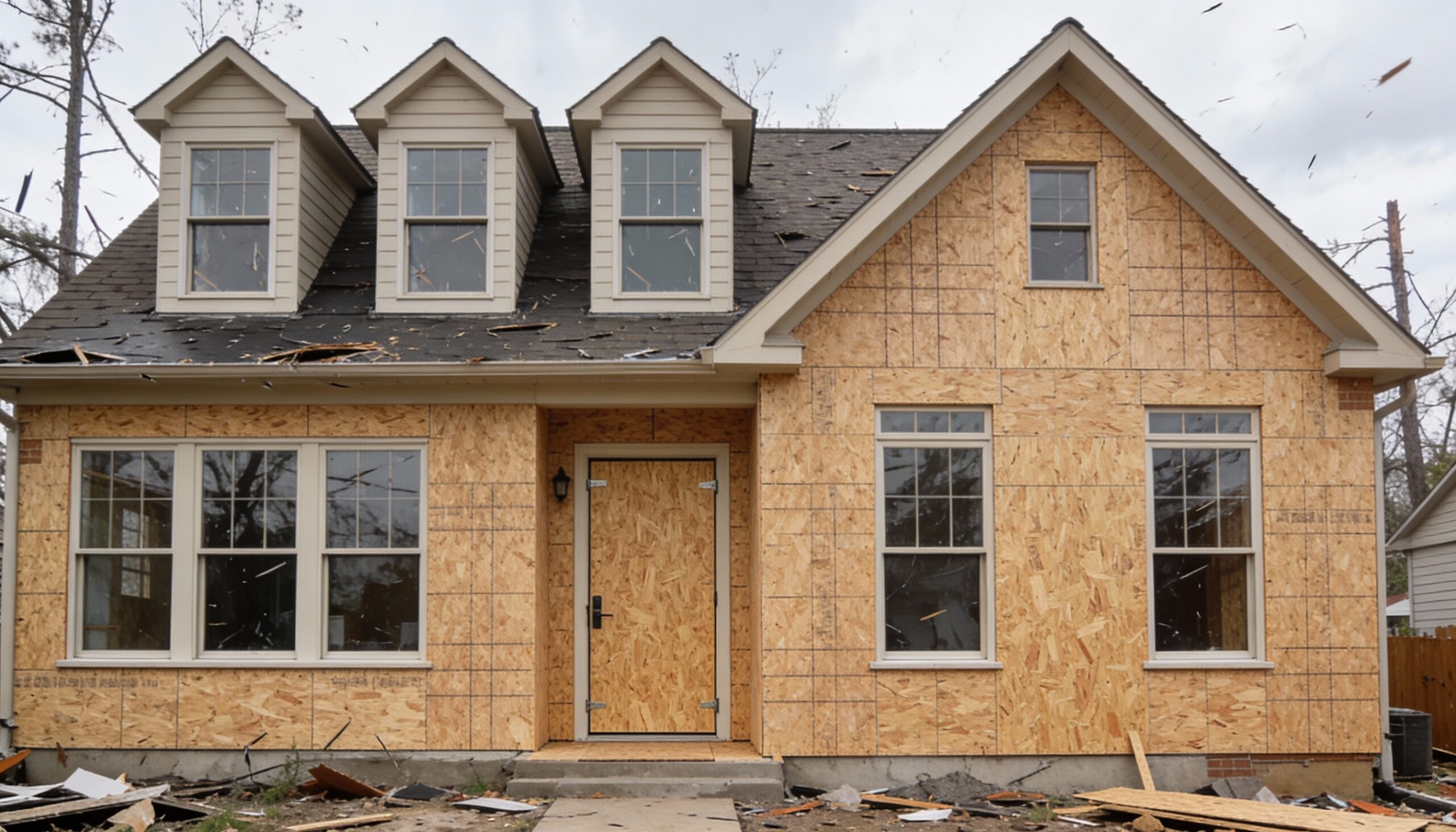
Storm damage commonly creates openings requiring board-up. High winds break windows, remove siding panels, and damage doors. Hail shatters glass and creates roof penetrations. Flying debris creates openings throughout building envelopes.
After severe storms, even properties without major structural damage may have multiple openings requiring boarding. Quick assessment following storms identifies boarding needs before weather changes or security becomes compromised.
Fire Damage
Fires commonly break windows and may burn through walls or roofs. Firefighting operations also create openings through forcible entry, ventilation holes, and equipment access. Fire-damaged properties typically require board-up for both security and weather protection during the restoration period.
Fire scene board-up may occur after fire department releases the scene, coordinating with investigators when necessary.
Vehicle Impact
Vehicles striking buildings create immediate openings often requiring emergency boarding. Storefronts, garage doors, and corner locations are common vehicle impact points. These incidents require rapid response to secure buildings, especially commercial properties with inventory and equipment.
Break-Ins and Vandalism
After break-ins damage doors or windows, board-up provides temporary security until permanent repairs complete. Rapid boarding prevents additional intrusions and protects remaining contents.
Fallen Trees
Tree damage to buildings often creates roof penetrations, broken windows, and damaged walls requiring boarding. Tree removal must often precede board-up, requiring coordination between tree service and boarding crews.
Professional Property Board-Up Services
Emergency board-up requires appropriate materials, tools, and techniques for effective protection. Professional services bring these elements together with rapid response capability.
Materials Used
Plywood: Most board-up uses 1/2-inch or 5/8-inch plywood cut to fit openings. Exterior-grade plywood resists moisture during extended exposure. Proper sizing ensures complete coverage without excessive gaps.
OSB (Oriented Strand Board): An alternative to plywood, OSB provides similar protection at lower cost. OSB is appropriate for short-term boarding where moisture exposure is limited.
Security Panels: Some services use steel security panels for high-risk locations or commercial properties requiring enhanced security. These panels resist forced entry better than wood alternatives.
Clear Boarding: Polycarbonate clear panels maintain visibility while providing security and weather protection. Commonly used for storefronts where visibility matters for business operations.
| Board-Up Material | Best Applications | Advantages |
|---|---|---|
| Plywood (5/8″) | Windows, doors, wall openings | Strong, weather-resistant, versatile |
| OSB | Short-term protection, cost-sensitive situations | Lower cost, readily available |
| Steel panels | High-crime areas, commercial properties | Enhanced security, reusable |
| Polycarbonate panels | Storefronts, retail locations | Maintains visibility, light transmission |
Attachment Methods
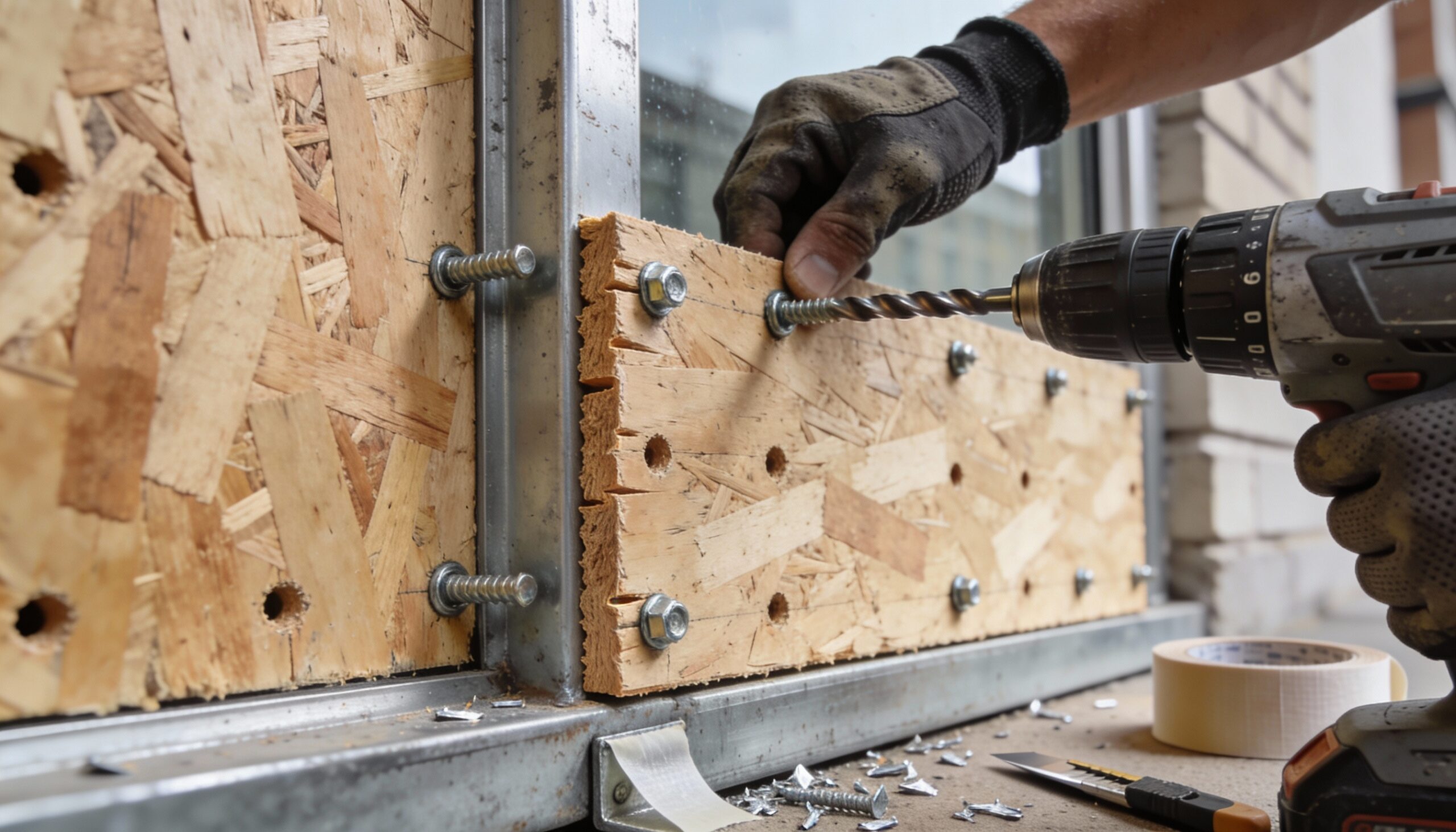
Secure attachment prevents boards from being removed by wind or intruders. Professional installation uses methods matched to building construction:
Screw attachment: Screws through plywood into framing provide secure attachment easily removed for permanent repairs. Washer heads prevent pull-through.
Bolt-through systems: For masonry construction or enhanced security, bolt-through systems pass fasteners completely through wall materials.
Track systems: Some commercial applications use track systems allowing rapid board installation and removal. These systems are cost-effective for repeatedly secured locations.
Roof Protection
Roof openings require different approaches than wall openings. Roof board-up may include:
Tarping: Heavy-duty tarps secured over roof damage prevent water intrusion. Proper tarping extends well beyond damage edges and anchors securely.
Plywood covering: For accessible roof damage, plywood provides more durable protection than tarping. Sealed edges prevent water penetration.
Temporary roofing: Extensive roof damage may require temporary roofing systems providing protection during extended restoration timelines.
Door Security
Damaged doors require special consideration because doors provide both security and access. Options include:
Door boarding: Completely boarding over door openings provides maximum security when access isn’t needed.
Temporary doors: Installing temporary steel or heavy wood doors maintains both security and access capability.
Lock reinforcement: When doors remain usable, reinforced locks and hardware enhance security without boarding.
What to Expect from Board-Up Services
Understanding the board-up process helps property owners know what to expect and how to coordinate with emergency services.
Response Time
24/7 emergency services provide rapid board-up response, typically arriving within hours of contact. During major storm events, response times may extend due to high demand, but emergency boarding remains a priority response.
Assessment
Crews assess all building openings, identifying boarding needs and appropriate materials for each opening. Assessment includes:
- All windows and glass doors
- Damaged entry doors
- Garage doors and large openings
- Roof penetrations and damage
- Wall damage creating openings
- Structural damage affecting security
Installation
Professional crews install boarding using appropriate materials and methods for each opening. Work proceeds efficiently to minimize exposure time. Debris from damaged openings may be cleared as part of boarding work.
Documentation
Service documentation records all boarding installed, supporting insurance claims. Photos of damage before boarding and completed boarding provide claim evidence.
Board-Up and Restoration Coordination
Board-up services coordinate with ongoing restoration to ensure protection continues throughout the restoration process without impeding necessary work.
During Assessment
Board-up may need adjustment to allow damage assessment access. Professional services coordinate with restoration teams, providing removable or partial boarding enabling assessment while maintaining protection.
During Restoration
Active restoration requires material delivery, equipment access, and worker entry. Board-up solutions accommodate these needs while maintaining security. Some openings may transition from boarding to temporary doors or other access solutions.
As Repairs Complete
As permanent repairs replace damaged components, boarding is removed and returned or disposed of appropriately. Coordination ensures boarding removal aligns with repair completion, maintaining continuous protection.
DIY vs. Professional Property Board-Up Services
Property owners sometimes consider DIY boarding to save costs or address immediate needs before professional help arrives.
When DIY May Be Appropriate
- Single small opening requiring basic protection
- Temporary protection while awaiting professional service
- Situations where professional services are unavailable
- Property owners with appropriate tools and experience
Advantages of Professional Service
- Proper materials: Professional services carry appropriate materials ensuring effective protection
- Correct sizing: Properly fitted boards provide complete coverage without gaps
- Secure attachment: Professional methods ensure boards remain in place during weather events
- Safety: Professionals safely access elevated openings and handle damaged materials
- Documentation: Service records support insurance claims
- Coordination: Professional services integrate with restoration workflow
DIY Boarding Considerations
If attempting DIY boarding:
- Use exterior-grade plywood minimum 1/2-inch thick
- Cut boards larger than openings, overlapping frames by at least 2 inches
- Use appropriate screws (not nails) long enough to penetrate framing
- Pre-drill plywood to prevent splitting
- Seal edges with caulk to prevent water intrusion
- Document work with photographs for insurance
Warning: Avoid working on elevated openings without proper fall protection. Roof and second-story boarding presents fall hazards best addressed by professionals with appropriate equipment.
Frequently Asked Questions About Property Board-Up Services
How quickly can emergency board-up services respond?
+
Professional 24/7 emergency services typically respond within 1-4 hours for urgent boarding needs. Response time may extend during major storm events affecting many properties simultaneously. Contact services immediately after damage occurs to minimize wait time and exposure to additional damage.
Will insurance cover property board-up services?
+
Most property insurance policies cover emergency board-up as part of loss mitigation expenses. Policies typically require property owners to take reasonable steps to prevent additional damage after covered losses. Keep all receipts and documentation for claim submission. Board-up is usually covered separately from deductibles as a mitigation expense.
How long will board-up remain in place?
+
Board-up remains until permanent repairs replace damaged components. Timeline depends on restoration complexity, material availability, and contractor scheduling. Simple window replacements may complete within days; complex repairs may require weeks or months. Professional boarding is designed for extended duration when necessary.
Can I enter my property after it’s been boarded?
+
Yes, board-up typically includes maintained access through one secured entry point. Some boarding configurations include lockable access doors or removable panels. Discuss access needs with your boarding service provider to ensure appropriate entry provisions.
What if additional damage occurs after board-up?
+
Contact your board-up provider immediately if boards are damaged or displaced. Additional boarding or repairs may be necessary. Document any new damage with photographs for insurance purposes. Professional services typically provide follow-up support for boarding they’ve installed.
Do I need board-up if I’m staying in the property?
+
Occupied properties still benefit from board-up for openings that compromise weather protection or security. Boarding prevents continued weather damage and maintains reasonable security even during occupancy. Discuss your situation with service providers for recommendations appropriate to your circumstances.
Get Professional Emergency Property Board-Up Services
Rapid board-up following property damage prevents secondary losses and creates safer conditions for restoration work. Professional services provide appropriate materials, secure installation, and documentation supporting insurance claims.
When damage requires emergency boarding in Northern New Jersey, Pennsylvania’s Capital Region, New York’s Hudson Valley, Connecticut’s Capital Region, or the South Jersey Shore, 24/7 emergency services provide rapid response to protect your property and begin the restoration process.