
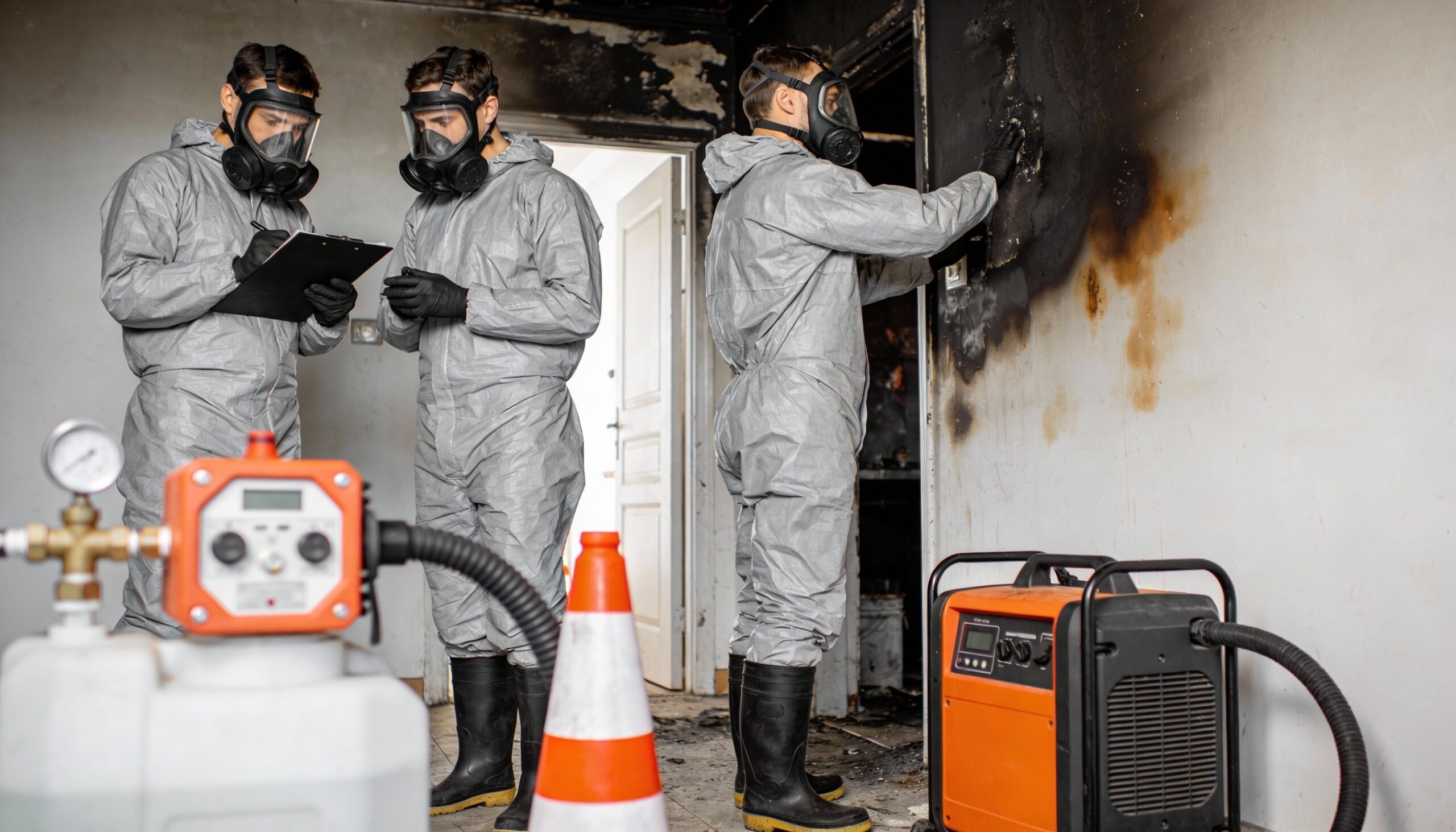
Hidden Hazards in Fire-Damaged Properties – Fire Damage Cleanup Safety
Fire-damaged properties contain numerous hazards that aren’t immediately apparent. Professional fire damage restoration begins with hazard assessment that identifies risks before cleanup work proceeds.
Structural Compromise
Fire weakens structural components including roof framing, floor joists, load-bearing walls, and support beams. Charred wood loses strength significantly, and structural connections may fail even under normal loads. What appears structurally sound may collapse without warning.
Professional assessment evaluates structural integrity before anyone enters fire-damaged areas extensively. Severe damage may require engineering evaluation before cleanup can safely proceed. Temporary shoring stabilizes weakened structures during restoration.
Toxic Air Quality
Fire generates toxic combustion byproducts that linger in air and settle on surfaces throughout affected structures. Smoke contains carcinogens, heavy metals, and respiratory irritants including:
- Carbon monoxide – potentially fatal, odorless gas
- Hydrogen cyanide – from burning plastics and synthetics
- Polycyclic aromatic hydrocarbons – known carcinogens
- Formaldehyde – from building materials
- Asbestos fibers – released when older insulation burns
- Heavy metals – from electronics, paints, and household items
These hazards persist long after fires are extinguished. Professional air quality assessment determines when properties are safe for occupancy and guides necessary remediation.
Warning: Never enter fire-damaged properties without proper respiratory protection. Even brief exposure to fire residue can cause respiratory symptoms and health complications. Professional assessment should clear properties before unprotected entry.
Electrical Hazards
Fire damages electrical systems in ways that create ongoing hazards. Burned insulation exposes live wiring. Heat-damaged components may fail unexpectedly. Water from firefighting efforts creates additional electrical risks in combination with damaged wiring.
Professional protocols require electrical assessment and often complete disconnection before cleanup begins. Licensed electricians evaluate systems before power restoration. These precautions prevent electrocution and electrical fires during and after restoration.
Water Damage Complications
Firefighting introduces thousands of gallons of water into fire-damaged structures. This water combines with fire debris to create contaminated conditions requiring special handling. Standing water near electrical systems creates immediate hazards.
Fire suppression water damage requires both water extraction and fire damage cleanup protocols. The combination of fire contamination and water intrusion compounds restoration complexity.
Professional Safety Protocols for Fire Cleanup
Restoration professionals follow established protocols ensuring safe fire damage cleanup. These procedures protect workers while preventing contamination spread and additional property damage.
Pre-Entry Assessment
Before entering fire-damaged properties, teams conduct exterior assessment noting obvious structural damage, utility status, and access concerns. Fire department clearance confirms no ongoing hazards like smoldering materials or gas leaks.
Initial interior assessment proceeds cautiously with proper protective equipment. Assessors check structural stability, identify hazardous materials, evaluate air quality, and document conditions guiding cleanup planning.
Personal Protective Equipment Requirements
Fire damage cleanup requires comprehensive PPE protecting against multiple hazard types:
| PPE Type | Protection Provided | When Required |
|---|---|---|
| Respirators (N95 minimum, often P100 or PAPR) | Particulate and vapor protection | All fire damage cleanup activities |
| Safety glasses or goggles | Eye protection from debris and particles | All cleanup activities |
| Protective coveralls | Skin protection, contamination control | Moderate to heavy contamination |
| Gloves (appropriate for task) | Hand protection from debris, chemicals | All cleanup activities |
| Steel-toe boots | Foot protection from debris, punctures | All on-site work |
| Hard hats | Head protection from falling debris | Structural damage present |
PPE selection matches specific hazards identified during assessment. Heavy soot requires full coveralls and upgraded respiratory protection. Minor smoke damage may permit lighter PPE while maintaining respiratory protection.

Containment Procedures
Preventing contamination spread protects unaffected areas and occupants. Professional cleanup establishes containment barriers isolating damaged areas from clean spaces. These barriers include:
- Plastic sheeting creating physical barriers at doorways and transitions
- HEPA air scrubbers filtering airborne particles in work areas
- Negative air pressure preventing contaminated air from flowing to clean areas
- Decontamination zones where workers remove PPE before leaving contained areas
HVAC systems are shut down and sealed to prevent contamination distribution. Registers and returns receive temporary covers preventing soot spread through ductwork.
Safe Material Handling
Fire-damaged materials require careful handling protecting workers and preventing secondary contamination. Debris removal follows specific protocols:
Wet removal: Misting debris reduces airborne particle generation during handling. This simple technique significantly reduces inhalation hazards.
Bagging procedures: Debris goes into appropriate containers, sealed before transport through clean areas. Double-bagging provides additional protection for heavily contaminated materials.
Proper disposal: Fire debris may contain hazardous materials requiring special disposal. Electronics, treated wood, and materials containing hazardous substances follow applicable regulations.
Air Quality Management During Fire Cleanup
Maintaining safe air quality throughout fire damage cleanup protects workers and prevents contamination spread. Professional protocols address air quality continuously rather than just at project completion.
Air Scrubbing
HEPA air scrubbers filter particulates from work area air. These units cycle air through high-efficiency filters capturing soot particles and other contaminants. Continuous air scrubbing maintains breathable conditions in contained work areas.
Air scrubber placement and quantity match work area size and contamination levels. Professional calculations ensure adequate air changes per hour for effective filtration.
Ventilation Strategies
When conditions permit, ventilation introduces fresh air while exhausting contaminated air. This approach accelerates air quality improvement and reduces worker exposure. However, ventilation must be controlled to prevent drawing contamination into unaffected areas.
Negative air pressure ensures air flows into contained work areas rather than out. Exhaust fans push contaminated air outside through filters, while replacement air draws from clean areas or outdoors.
Air Quality Monitoring
Ongoing air quality monitoring confirms safe conditions throughout cleanup. Particle counters measure airborne contamination levels. Carbon monoxide detectors ensure safe concentrations. This monitoring guides PPE requirements and identifies when additional protective measures are needed.
Final air quality testing verifies safe conditions before property reoccupancy. This clearance testing demonstrates that cleanup achieved acceptably safe air quality throughout the structure.

Specific Safety Concerns by Damage Type
Different fire damage scenarios present distinct safety challenges requiring adapted protocols.
Structure Fires
Major structure fires cause extensive damage requiring comprehensive safety evaluation. Structural stability, complete utility shutdown, and thorough hazard assessment precede any interior work. Multiple safety concerns occur simultaneously in structure fire scenarios.
Extensive charring indicates severe structural compromise. Areas with heavy char typically require careful evaluation before access. Floor integrity testing using probing tools prevents falls through fire-weakened flooring.
Kitchen Fires
Kitchen fires often involve grease, producing particularly stubborn residues and intense heat damage in concentrated areas. Protein smoke from cooking fires creates specific cleaning challenges and strong odors requiring specialized deodorization.
Fire suppression system discharge in commercial kitchens adds chemical contamination to fire damage. Cleanup addresses both fire residue and suppression agent residue.
Electrical Fires
Electrical fires damage wiring systems that may extend far beyond visible fire damage. Complete electrical system evaluation precedes cleanup. Burned wiring in walls, attics, and other concealed spaces requires careful assessment.
Arc damage from electrical fires creates hot spots in building materials that may reignite. Professional cleanup includes thermal imaging to identify any remaining hot spots requiring attention.
Smoke Damage Without Fire
Furnace puff-backs and other smoke events contaminate properties without structural fire damage. While structural concerns are less severe, air quality and residue hazards remain significant. Professional smoke cleaning applies appropriate safety measures for contamination levels present.
Safety During Reconstruction
Following initial cleanup, reconstruction work presents additional safety considerations. Proper transitions between cleanup and reconstruction phases maintain safety throughout restoration.
Clearance Before Reconstruction
Professional protocols require contamination clearance before reconstruction begins. Air quality testing, surface testing, and visual verification confirm successful cleanup. Starting reconstruction in still-contaminated conditions spreads residue and contaminates new materials.
Continuing Respiratory Protection
Reconstruction activities like demolition and sanding can aerosolize residual contamination. Respiratory protection continues during reconstruction phases that disturb surfaces potentially containing residual contamination.
Material Handling Precautions
New materials require protection from residual contamination. Storage areas should be clearly separated from contaminated zones. Installation proceeds only after areas achieve clearance standards.
When Property Owners Can Safely Enter
Property owners naturally want to assess damage and retrieve belongings. Professional guidance on safe entry timing protects owners from hazard exposure.
Preliminary Assessment Entry
Brief entry with proper respiratory protection may be appropriate for preliminary assessment of minor fire damage. Property owners should wear N95 respirators at minimum and limit time in affected areas. Professional assessment should precede owner entry in moderate to severe damage scenarios.
Contents Retrieval
Removing important documents, medications, and irreplaceable items from fire-damaged properties requires appropriate precautions. Professional restoration teams can assist with essential item retrieval from heavily contaminated areas.
Items removed from fire-damaged properties require cleaning before extended handling. Smoke residue on retrieved items continues releasing contaminants. Professional content cleaning addresses contaminated belongings appropriately.
Reoccupancy Clearance
Professional clearance testing should verify safe conditions before reoccupancy. This testing confirms that air quality, surface contamination, and structural stability meet appropriate standards. Written clearance documentation protects property owners and provides records for insurance and legal purposes.
Frequently Asked Questions About Fire Cleanup Safety
When is it safe to enter my fire-damaged home?
+
Wait for fire department clearance before any entry. For initial assessment with proper respiratory protection, brief entry may be acceptable for minor damage. Professional assessment should precede extended entry for moderate to severe damage. Full reoccupancy should wait until professional clearance testing confirms safe conditions.
What protective equipment do I need to enter a fire-damaged property?
+
At minimum, wear an N95 respirator for any entry into fire-damaged areas. Heavy damage requires upgraded respiratory protection like P100 respirators or powered air-purifying respirators. Eye protection, gloves, and closed-toe shoes provide additional protection. Professional assessment can guide appropriate protection levels for your specific situation.
How do I know if my house is structurally safe after a fire?
+
Structural safety requires professional evaluation. Visible char depth, burned structural members, and damaged connections indicate potential compromise. Severe damage may require engineering assessment. Never assume structural safety based on visual inspection alone, as fire damage weakens components in ways that aren’t visually obvious.
Can smoke damage make me sick?
+
Yes, smoke residue contains numerous harmful compounds including carcinogens, respiratory irritants, and toxic metals. Brief exposure may cause headaches, eye irritation, and respiratory symptoms. Extended exposure or heavy concentrations can cause more serious health effects. Professional cleanup removes these hazards, making properties safe for occupancy.
Should I turn on fans or open windows after a fire?
+
Wait for professional guidance before changing ventilation. While fresh air seems helpful, uncontrolled ventilation can spread contamination throughout the structure. HVAC systems should remain off until professional cleaning. Controlled ventilation during professional cleanup follows protocols preventing contamination spread.
Is the water used to fight fires safe?
+
Fire suppression water mixes with fire debris, soot, and household chemicals, becoming contaminated during firefighting. This water requires professional extraction and may contain hazardous substances. Avoid contact with standing water in fire-damaged properties. Professional restoration addresses water damage alongside fire damage appropriately.
Trust Professional Fire Damage Safety Protocols
Fire damage cleanup requires safety protocols that protect workers and property occupants from significant hazards. Professional restoration teams maintain training, equipment, and procedures ensuring safe, thorough cleanup that prepares properties for safe reoccupancy.
When fire affects your property in Northern New Jersey, Pennsylvania’s Capital Region, New York’s Hudson Valley, Connecticut’s Capital Region, or the South Jersey Shore, certified restoration professionals provide the expertise and safety protocols needed for complete, safe fire damage recovery.