
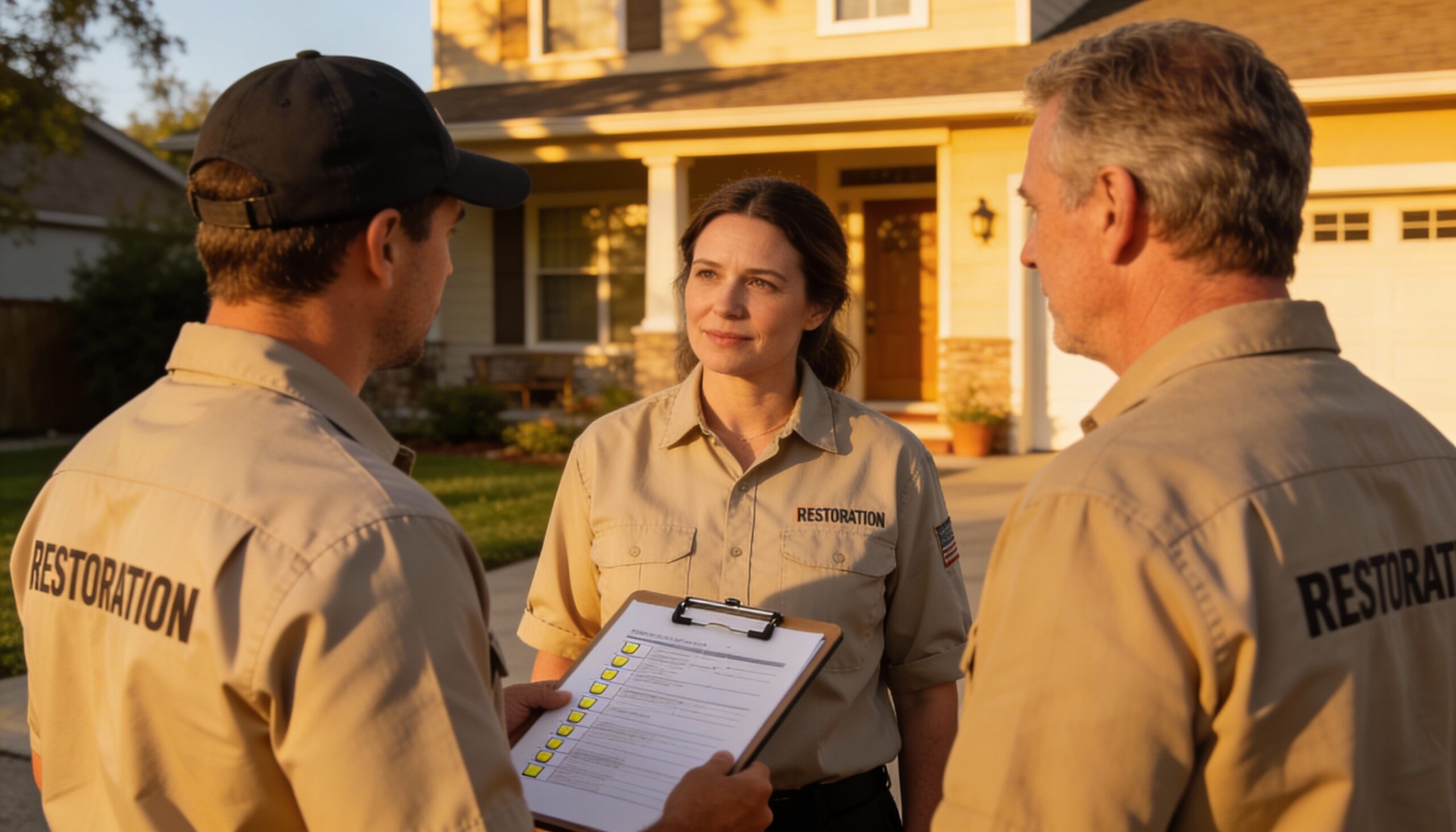
Why Choosing the Right Restoration Company Matters
Disaster restoration involves complex technical processes that require specialized knowledge, equipment, and experience. Poor restoration work creates lasting problems including hidden moisture damage, mold growth, structural compromise, and incomplete repairs that surface months or years later. These failures often cost more to correct than original restoration would have cost when done properly.
Beyond technical concerns, restoration companies handle insurance documentation, coordinate with adjusters, and guide property owners through unfamiliar processes during stressful times. The right company provides both technical excellence and supportive service that reduces stress while protecting your interests.
Consequences of Poor Restoration Selection
- Incomplete drying leading to hidden mold growth requiring later mold remediation
- Improper cleaning leaving contamination that causes ongoing health issues
- Inadequate documentation resulting in denied or reduced insurance claims
- Structural problems from missed damage or improper repairs
- Extended timeline from inefficient processes and mistakes requiring correction
- Additional costs when work must be redone by qualified professionals
Essential Certifications for Disaster Restoration Professionals
Professional certifications demonstrate training in industry-standard protocols and commitment to quality work. While certification alone doesn’t guarantee excellent service, lack of certification raises serious concerns about provider competency.
IICRC Certifications
The Institute of Inspection, Cleaning and Restoration Certification (IICRC) establishes industry standards for restoration work. IICRC-certified technicians complete coursework and examinations demonstrating knowledge of proper restoration procedures. Key certifications for disaster restoration professionals include:
| Certification | Full Name | Coverage Area |
|---|---|---|
| WRT | Water Damage Restoration Technician | Water extraction, drying, moisture control |
| FSRT | Fire and Smoke Restoration Technician | Fire damage cleanup, smoke removal, deodorization |
| AMRT | Applied Microbial Remediation Technician | Mold remediation, microbial contamination |
| OCT | Odor Control Technician | Odor identification and elimination |
| ASD | Applied Structural Drying | Advanced drying techniques, specialty materials |
Quality restoration companies employ multiple certified technicians and maintain company-level IICRC certification as well. Ask potential providers about specific certifications held by technicians who would work on your project.
Manufacturer Certifications
Equipment manufacturers offer training programs for their products. Technicians certified by Dri-Eaz, Phoenix, Xactimate, and other industry suppliers demonstrate proficiency with specific equipment and software. These certifications complement IICRC credentials.
Specialty Certifications
Specific restoration scenarios require additional credentials. OSHA bloodborne pathogen training is mandatory for biohazard cleanup. Asbestos and lead abatement require state-specific licensing. Ask about specialty certifications relevant to your specific situation.
Business Qualifications to Verify
Beyond technical certifications, legitimate disaster restoration professionals maintain appropriate business credentials. Verifying these qualifications protects you from unqualified operators and potential liability.
Licensing Requirements
Licensing requirements vary by state and locality. Many jurisdictions require general contractor licenses for restoration work, with additional licenses for specific services like asbestos removal. Verify that potential providers hold all licenses required in your area.
Request license numbers and verify them with issuing agencies. Legitimate companies provide this information readily and welcome verification.
Insurance Coverage
Restoration companies should carry comprehensive insurance including:
- General liability insurance – minimum $1 million coverage protecting against property damage and injury claims
- Workers’ compensation – covering employee injuries on your property
- Professional liability/errors and omissions – covering mistakes in professional services
- Pollution liability – especially important for environmental remediation work
Request certificates of insurance and verify coverage is current. Uninsured contractors expose property owners to liability for accidents and damages during restoration work.
Business Establishment
Established companies with local presence offer advantages over transient operators. Verify physical business locations, years in operation, and local reputation. Storm-chasing contractors who appear after disasters and disappear afterward leave property owners without recourse when problems develop.
Pro Tip: Check Better Business Bureau ratings, online reviews across multiple platforms, and request references from recent projects similar to yours. Established companies accumulate track records that reveal service quality patterns.
Questions to Ask Potential Restoration Companies
Direct questions reveal company qualifications and service approach. Quality providers answer confidently and provide documentation; evasive responses suggest concerns.
Technical Capability Questions
- What certifications do your technicians hold for my type of damage?
- How many years of experience does your company have with this damage type?
- What equipment will you use for this project?
- How do you determine when drying/cleaning is complete?
- What documentation will you provide throughout the project?
- Do you handle both mitigation and reconstruction, or only mitigation?
Business Practice Questions
- Can you provide your license numbers and insurance certificates?
- Do you offer written estimates before work begins?
- How do you handle scope changes during the project?
- What warranties do you provide on your work?
- Can you provide references from similar recent projects?
- How do you communicate project status throughout restoration?
Insurance Coordination Questions
- Do you work directly with insurance companies?
- Can you provide documentation in formats insurers require?
- Will you meet with my insurance adjuster during inspections?
- Do you offer direct insurance billing?
- What happens if insurance doesn’t cover the full estimate?
Red Flags to Avoid When Choosing Restoration Companies
Certain warning signs indicate potentially problematic providers. Recognizing these red flags helps property owners avoid companies that may deliver poor results or engage in questionable practices.
Immediate Concerns
Pressure to sign immediately: Legitimate companies provide written estimates and allow reasonable decision time. High-pressure sales tactics suggest desperation or deceptive practices.
No written estimate or contract: Professional restoration requires documented scope, pricing, and terms. Verbal-only agreements offer no protection when disputes arise.
Request for large upfront payment: Standard practice involves progress billing or payment upon completion. Demands for substantial payment before work begins suggest financial instability or potential fraud.
Cannot provide license or insurance documentation: Legitimate businesses provide credentials promptly. Inability to produce documentation indicates potential problems.
Operational Concerns
No physical business location: Established restoration companies maintain offices, equipment storage, and local presence. Providers operating only from vehicles or without verifiable addresses may disappear when problems arise.
Offers to waive insurance deductible: This practice constitutes insurance fraud in most jurisdictions. Companies offering deductible waivers may inflate claims, deliver substandard work, or create legal complications for property owners.
Unusually low estimates: Quality restoration requires substantial equipment, trained personnel, and appropriate materials. Extremely low bids often indicate corner-cutting that produces poor results.
No certifications or evasive about qualifications: Professional restoration requires training. Companies without certifications or unwilling to discuss qualifications likely lack necessary expertise.
Warning: Storm-chasing contractors often arrive after major weather events, soliciting door-to-door with aggressive tactics. These transient operators frequently deliver poor work and disappear before problems become apparent. Choose established local companies over unknown out-of-area contractors.
What to Expect From Quality Restoration Services
Understanding professional service standards helps property owners recognize quality providers and evaluate service delivery. Legitimate disaster restoration professionals consistently demonstrate these characteristics.
Communication Standards
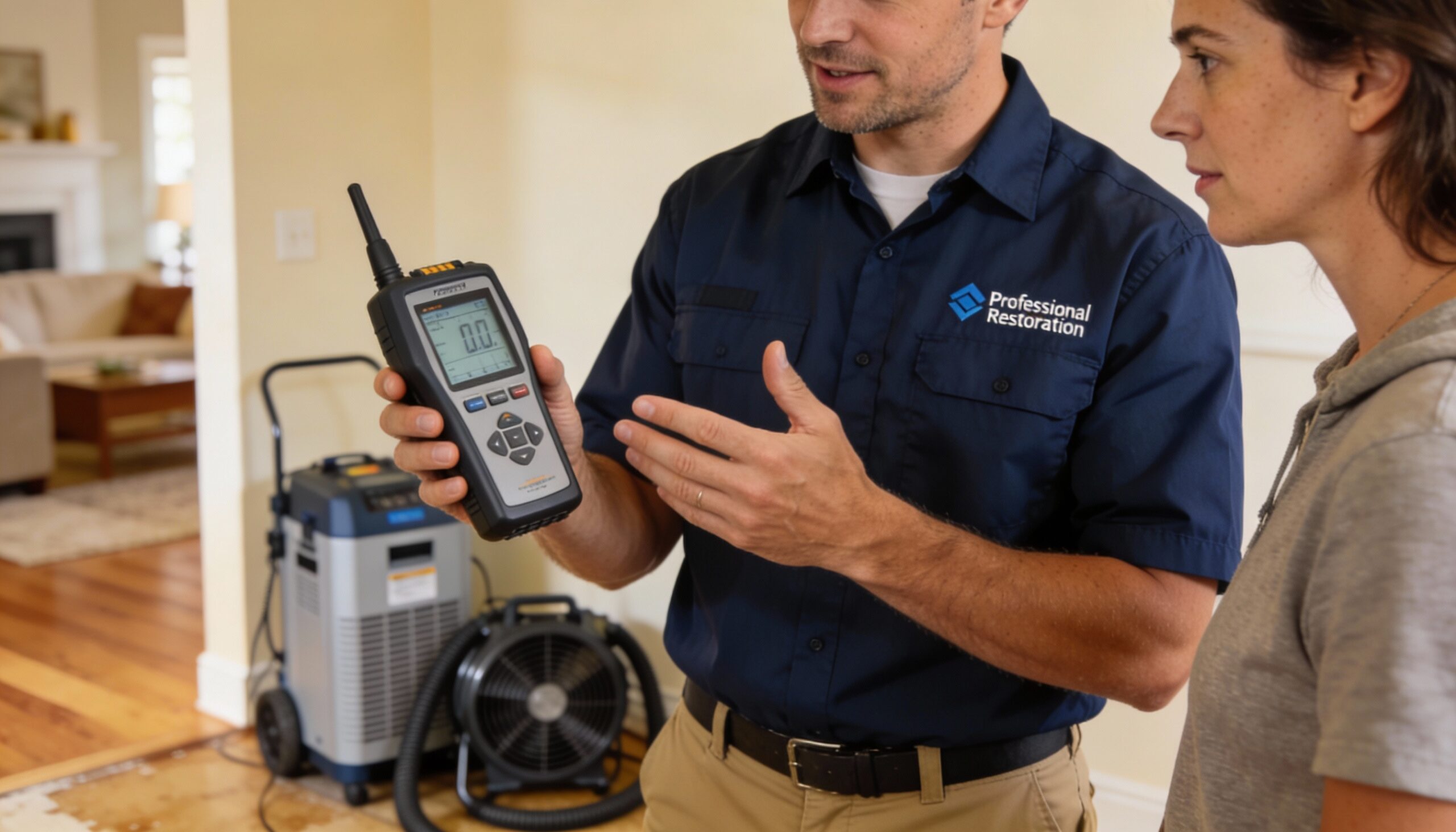
Quality providers communicate clearly throughout projects. Expect detailed explanations of damage findings, proposed remediation approaches, timeline estimates, and progress updates. Good communication reduces stress and ensures alignment between expectations and outcomes.
Professional companies provide written documentation including scope of work, estimates, daily logs, moisture readings, and completion reports. This documentation supports insurance claims and creates project records.
Equipment and Process Standards
Professional restoration requires commercial-grade equipment including extraction units, dehumidifiers, air movers, air scrubbers, and monitoring instruments. Quality providers maintain sufficient equipment inventory to handle projects properly without delays.
Work follows established protocols based on IICRC standards and manufacturer guidelines. Technicians should explain their processes and answer questions about why specific approaches apply to your situation.
Customer Service Standards
24/7 emergency availability is standard for disaster restoration. Quality providers answer calls around the clock with live staff and dispatch teams promptly. Response time should be specified and met consistently.
Professional conduct includes respecting your property, maintaining clean work areas, and addressing concerns promptly. Restoration work is disruptive by necessity, but professional teams minimize inconvenience and communicate about expected impacts.
The Value of Local Restoration Professionals
Local restoration companies offer advantages beyond convenience. Understanding these benefits helps property owners appreciate why local providers often deliver better outcomes than out-of-area alternatives.
Local Knowledge
Established local companies understand regional construction methods, common damage patterns, local regulations, and area-specific challenges. This knowledge informs better restoration approaches tailored to local conditions.
Local providers maintain relationships with area adjusters, building officials, and subcontractors. These relationships facilitate smoother project execution and problem resolution.
Accountability
Local companies depend on community reputation for ongoing business. This accountability motivates quality work and responsive customer service. Providers who plan to serve the community long-term invest in customer satisfaction.
If problems develop after project completion, local companies remain accessible for warranty service and issue resolution. Out-of-area contractors may be unreachable when later problems arise.
Response Time
Local staging means faster emergency response. Companies with nearby facilities deploy quickly without travel delays that extend damage exposure. Faster response often means less damage and lower restoration costs.
Getting Multiple Estimates
Obtaining multiple estimates helps property owners evaluate options and understand appropriate scope for their situation. However, emergency situations may not allow extended comparison shopping.
When Multiple Estimates Make Sense
- Non-emergency situations where time permits comparison
- Large projects with significant cost implications
- Reconstruction work after initial mitigation completes
- When initial estimates seem inconsistent with damage extent
When Immediate Decision Is Appropriate
- Active water intrusion requiring immediate extraction
- Safety hazards requiring urgent remediation
- Time-sensitive situations where delay increases damage
- When a clearly qualified provider is available immediately
Even in emergencies, basic qualification verification remains important. Quick credential checks can prevent engagement with unqualified providers even under time pressure.
Frequently Asked Questions About Choosing Restoration Companies
Should I use my insurance company’s preferred restoration vendor?
+
You have the right to choose any qualified restoration company regardless of insurance company preferences. Preferred vendors may offer streamlined billing, but you’re not obligated to use them. Evaluate preferred vendors using the same criteria as any other provider. Sometimes preferred vendors are excellent choices; sometimes independent companies better serve your interests.
How do I verify a restoration company’s certifications?
+
Request copies of certification documents from the company. IICRC certifications can be verified through the IICRC website’s certified firm directory. State licenses can be verified through state licensing board websites. Legitimate companies provide documentation readily and welcome verification efforts.
What if my insurance company’s estimate differs from the restoration company’s?
+
Estimate differences are common and can often be resolved through documentation and negotiation. Quality restoration companies document damage thoroughly and can justify their scope to adjusters. Request that your restoration company meet with the adjuster to discuss differences. Supplemental claims address discovered damage not in original estimates.
How long should I expect professional restoration to take?
+
Timeline varies dramatically based on damage type and extent. Water damage mitigation typically takes 3-7 days for drying. Fire damage restoration can take weeks depending on severity. Reconstruction following mitigation adds additional time. Quality providers offer realistic timeline estimates based on your specific situation rather than generic promises.
Can I stay in my home during restoration work?
+
This depends on damage type, extent, and personal preference. Limited damage affecting one area may permit continued occupancy. Extensive damage, contamination concerns, or significant reconstruction often requires temporary relocation. Quality restoration companies advise honestly about occupancy safety and can help coordinate temporary housing when needed.
What warranties should restoration companies provide?
+
Reputable companies provide written warranties on their work, typically covering workmanship for one year or more. Warranties should specify what’s covered, duration, and claim procedures. Ask about warranties before work begins and ensure warranty terms are included in written contracts.
Partner With Trusted Disaster Restoration Professionals
Selecting the right disaster restoration company protects your property, simplifies recovery, and ensures lasting results. By verifying certifications, checking credentials, asking informed questions, and recognizing red flags, property owners can identify quality providers capable of delivering excellent restoration outcomes.
When disaster affects your property in Northern New Jersey, Pennsylvania’s Capital Region, New York’s Hudson Valley, Connecticut’s Capital Region, or the South Jersey Shore, certified restoration professionals with established local presence provide the expertise and accountability you need for successful recovery.