
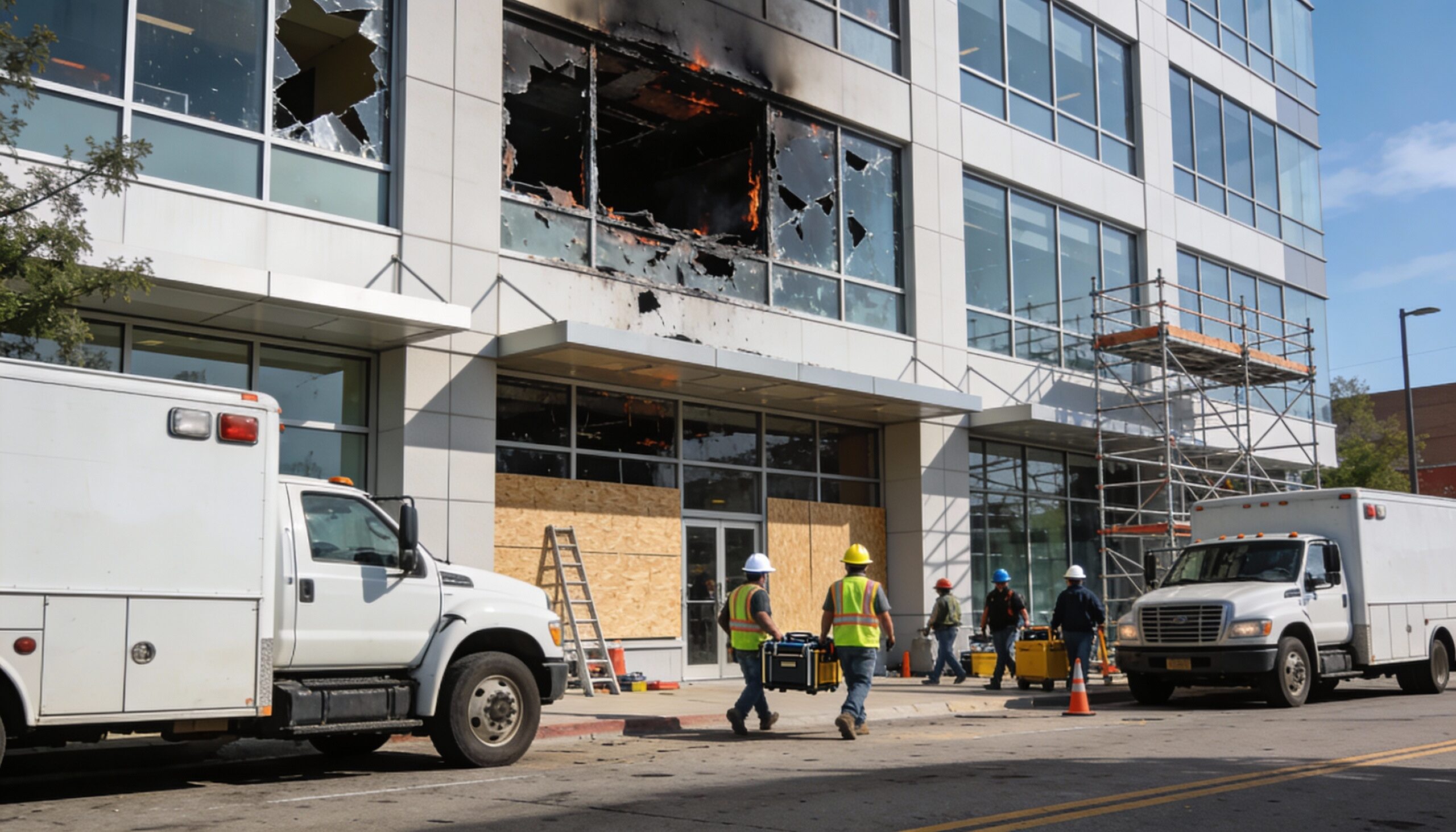
Understanding Commercial Fire Damage Restoration
Commercial fire damage restoration involves systematically repairing fire, smoke, and water damage to return a business property to pre-loss condition. Unlike residential restoration, commercial projects face unique challenges: larger square footage, specialized equipment, regulatory compliance requirements, and the urgent need to resume operations.
The scope of commercial fire damage extends far beyond visible flames. Smoke infiltrates HVAC systems, soot embeds in ceiling tiles and carpeting, and water from firefighting efforts creates secondary damage throughout the structure. Electrical systems, inventory, and critical business equipment all require assessment and potential replacement.
Business fire recovery timelines vary dramatically based on damage severity, but most commercial restorations follow a predictable pattern. Minor fires affecting single rooms may allow partial reopening within days, while major structural fires can require 3-6 months of comprehensive restoration work.
Immediate Steps After a Commercial Fire
The first 24-48 hours after a fire determine your recovery trajectory. Taking decisive action immediately protects your property from further damage and accelerates the fire damage restoration timeline.
Contact Emergency Services First
Before entering the building, ensure the fire department has cleared the structure as safe. Document everything with photos and videos for insurance purposes, but don’t remove or clean anything until adjusters inspect the damage. Your commercial fire damage claim depends on thorough documentation.
Notify your insurance carrier immediately—within hours if possible. Many commercial policies have strict reporting deadlines. Request an emergency advance if your policy includes business interruption coverage to maintain cash flow during restoration.
Secure the Property
Board up broken windows, damaged doors, and roof openings to prevent weather damage, theft, and liability issues. Arrange 24-hour security if valuable equipment or inventory remains on-site. Cordon off unsafe areas with clear signage to protect employees and prevent unauthorized entry.
⚠️ Warning: Never re-enter a fire-damaged building without structural clearance. Weakened floors, compromised ceilings, and damaged support beams create collapse risks that aren’t always visible.
Begin Water Damage Mitigation
Firefighting efforts often cause more damage than flames. Standing water, saturated insulation, and wet building materials create mold growth within 24-48 hours. Professional water damage restoration services should begin extraction and drying immediately to prevent secondary damage that compounds commercial fire damage.
The Commercial Fire Damage Restoration Process
Professional commercial fire damage restoration follows a systematic approach that addresses visible damage while preventing long-term problems. Understanding each phase helps you coordinate with contractors, manage insurance claims, and plan your business continuity strategy.
| Restoration Phase | Timeline | Key Activities | Business Impact |
|---|---|---|---|
| Emergency Response | 0-24 hours | Property securing, water extraction, initial assessment | Full closure, safety first |
| Damage Assessment | 1-3 days | Structural evaluation, inventory loss, equipment testing | Planning phase, insurance coordination |
| Content Pack-Out | 3-5 days | Salvageable items removal, document recovery, equipment relocation | Protecting assets, temporary operations possible |
| Cleaning & Deodorization | 1-2 weeks | Soot removal, smoke odor treatment, surface restoration | Preparations for rebuilding |
| Repairs & Reconstruction | 2-12 weeks | Structural repairs, systems replacement, interior finishing | Phased reopening opportunities |
| Final Inspection | 1-3 days | Building code verification, system testing, certificate of occupancy | Full operational restart |
Initial Assessment and Planning
Restoration professionals conduct comprehensive damage assessments within 24-48 hours. This evaluation documents structural integrity, smoke penetration depth, water damage extent, and contamination levels. The assessment drives the restoration plan and insurance claim.
Expect detailed reports covering:
- Structural damage to walls, ceilings, floors, and support systems
- HVAC contamination requiring cleaning or replacement
- Electrical system damage and safety concerns
- Inventory and equipment losses
- Estimated restoration timeline and phasing options
Smoke and Soot Removal
Smoke damage often exceeds visible fire damage in commercial properties. Acidic soot corrodes metal surfaces, stains walls and ceilings, and creates persistent odors that professional cleaning must address. Different fire types—protein fires, synthetic material fires, or natural substance fires—require specific cleaning approaches.
Commercial fire damage restoration teams use industrial air scrubbers, thermal fogging, and ozone treatment to eliminate smoke odors. Surface cleaning involves specialized chemicals that neutralize soot without damaging finishes. HVAC systems require thorough duct cleaning to prevent recirculating smoke particles throughout the building.
💡 Pro Tip: Don’t attempt DIY smoke cleaning in commercial spaces. Improper techniques spread soot deeper into porous materials and set stains permanently, increasing restoration costs significantly.
Water Damage Restoration
Firefighting water saturates insulation, seeps into wall cavities, and pools in structural spaces. Industrial dehumidifiers and air movers must run continuously for 3-7 days to dry commercial spaces thoroughly. Moisture meters track progress to ensure complete drying before reconstruction begins.
Wet materials require rapid response. Ceiling tiles, insulation, and carpeting typically need replacement after water exposure. Mold growth prevention depends on removing wet materials within 24-48 hours and maintaining proper drying conditions throughout restoration.
Structural Repairs and Reconstruction
Fire damage restoration transitions into rebuilding once cleaning and drying complete. Structural repairs address compromised support beams, damaged roofing, weakened floors, and fire-damaged walls. Code compliance often requires upgrading electrical, plumbing, and HVAC systems to current standards.
Reconstruction timelines vary based on damage extent and permit requirements. Minor repairs might complete within weeks, while major rebuilds require months. Working with experienced commercial contractors who understand business continuity needs can identify opportunities for phased reopening during reconstruction.

Minimizing Business Downtime During Recovery
Every day your business remains closed, you lose revenue, risk customer attrition, and face mounting fixed costs. Strategic business fire recovery planning reduces downtime through creative interim solutions and efficient restoration management.
Establish Temporary Operations
Depending on damage location, partial operations might continue in unaffected areas. Retail businesses can operate from parking lot temporary structures, offices can transition to remote work, and manufacturing might relocate critical equipment to warehouse space.
Consider these interim solutions:
- Temporary relocation: Lease short-term space to maintain client services during restoration
- Mobile operations: Deploy mobile units for customer-facing businesses
- Partnership arrangements: Share facilities with non-competing businesses temporarily
- Remote work transitions: Shift office functions to home-based operations
Communicate with Stakeholders
Transparent communication maintains customer loyalty and employee morale during business fire recovery. Notify clients immediately about the fire, provide reopening estimates, and update regularly as restoration progresses. Clear communication prevents customers from assuming permanent closure.
Keep employees informed about their work status, payroll continuation, and expected return dates. Maintaining staff during downtime preserves institutional knowledge and ensures smooth restart operations. Many businesses lose key employees during extended closures simply due to poor communication.
Leverage Business Interruption Insurance
Business interruption coverage pays for lost income and continuing expenses during commercial fire damage restoration. This coverage maintains cash flow for payroll, rent, loan payments, and other fixed costs while your business rebuilds.
Document everything for insurance claims: pre-fire revenue records, employee payroll, vendor contracts, and all restoration expenses. Detailed documentation accelerates claims processing and maximizes coverage benefits that keep your business solvent during recovery.
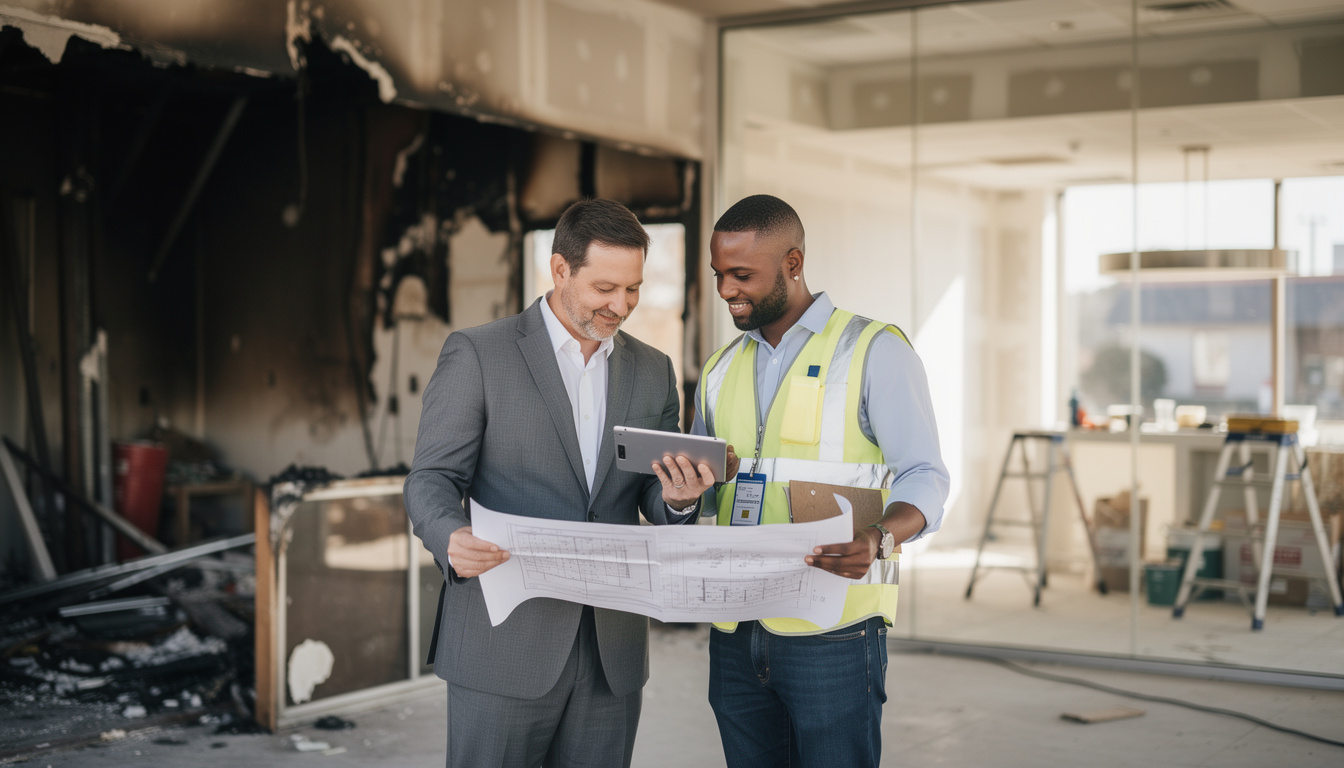
Choosing a Commercial Fire Damage Restoration Company
The restoration company you select directly impacts your downtime duration and recovery quality. Not all fire damage restoration contractors have commercial expertise or the resources to handle large-scale business projects.
Essential Qualifications
Look for restoration companies with specific commercial experience, proven capacity for large projects, and 24/7 emergency response capabilities. The company should carry appropriate licensing, comprehensive insurance, and bonding that protects your business during restoration work.
Verify the company’s equipment inventory includes industrial-grade dehumidifiers, commercial air scrubbers, and thermal imaging technology for hidden damage detection. Commercial projects require resources beyond residential restoration capabilities.
💡 Pro Tip: Request references from similar commercial projects—retail, office, manufacturing, or whatever matches your business type. Past performance with comparable properties indicates capability to handle your specific restoration needs.
Response Time and Availability
Emergency response speed determines how much secondary damage occurs. Companies specializing in commercial fire damage restoration should arrive on-site within 2-4 hours of your call, even during nights and weekends.
Discuss their project management approach. Dedicated project managers, daily communication schedules, and clear escalation processes keep restoration moving efficiently. Delays cost money—you need contractors who prioritize your timeline as much as quality work.
Insurance Coordination
Experienced commercial restoration companies work directly with insurance adjusters, provide detailed documentation, and navigate claim disputes professionally. This expertise accelerates insurance processing and ensures you receive full coverage benefits for commercial fire damage.
The right restoration partner acts as your advocate with insurance carriers, providing technical expertise that supports your claim and prevents underpayment. Their documentation quality, damage assessment accuracy, and cost estimation experience directly impacts your insurance settlement.
Preventing Future Commercial Fires
While commercial fire damage restoration returns your property to pre-loss condition, implementing prevention measures protects against future disasters. Most commercial fires result from preventable causes that businesses can address through proper systems and protocols.
Fire Prevention Systems
Modern fire suppression systems detect and contain fires before major damage occurs. Automatic sprinkler systems, smoke detection networks, and fire alarm monitoring significantly reduce commercial fire damage by enabling rapid response.
Regular maintenance keeps prevention systems operational. Schedule quarterly inspections for sprinkler systems, monthly smoke detector testing, and annual fire extinguisher servicing. Malfunctioning equipment provides false security that leaves your business vulnerable.
Employee Training and Protocols
Staff awareness prevents many common fire causes. Train employees on proper equipment shutdown, electrical safety, flammable material storage, and emergency evacuation procedures. Regular fire drills ensure everyone knows evacuation routes and assembly points.
Establish clear protocols for closing procedures that include equipment shutdown checklists and final building inspections. Many commercial fires occur after hours from equipment left running or malfunctioning electrical systems that staff might have noticed during business hours.
Regular Inspections and Maintenance
Schedule professional electrical system inspections every 3-5 years to identify hazards before they cause fires. HVAC maintenance prevents lint accumulation and overheating that commonly triggers commercial fires. Kitchen equipment, if applicable, requires daily cleaning and regular deep cleaning to prevent grease fires.
Document all maintenance activities for insurance purposes. Regular upkeep demonstrates due diligence that supports insurance claims and potentially reduces premium costs through risk mitigation credits.
Working with Insurance After Commercial Fire Damage
Insurance claims for commercial fire damage involve complex coverage types, extensive documentation requirements, and significant negotiation. Understanding the claims process and your policy coverage maximizes your settlement and accelerates payment.
Understanding Your Coverage
Commercial property insurance typically includes building coverage, business personal property (equipment and inventory), and business interruption insurance. Each coverage type has separate limits, deductibles, and claim requirements that affect your recovery funding.
Review your policy immediately after the fire to understand:
- Coverage limits for building repairs and content replacement
- Business interruption waiting periods and coverage duration
- Additional expense coverage for temporary relocation costs
- Deductible amounts and how they apply to different coverage types
Documentation Best Practices
Thorough documentation separates successful claims from disputed settlements. Photograph all damage before cleanup begins, save all damaged inventory for adjuster inspection, and maintain detailed expense records for every restoration cost.
Create comprehensive damage inventories listing every affected item with purchase dates, original costs, and replacement values. For equipment, include model numbers, serial numbers, and maintenance records that establish value. The more documentation you provide, the less room for insurance disputes.
🏠 Business Tip: Maintain digital backup copies of financial records, inventory lists, and equipment documentation off-site. Cloud storage ensures critical documentation survives disasters and supports insurance claims immediately.
Negotiating Fair Settlements
Initial insurance offers often undervalue commercial fire damage, especially for business interruption and content replacement. Don’t accept the first settlement without professional review. Restoration contractors and public adjusters can identify undervalued damage and support higher claim amounts.
Challenge lowball estimates with detailed contractor quotes, equipment replacement documentation, and comparable business interruption calculations. Insurance companies expect negotiation—reasonable pushback supported by documentation typically increases settlements significantly.
Regional Considerations for Commercial Fire Damage Restoration
Business fire recovery timelines and approaches vary by location based on local building codes, contractor availability, and regional environmental factors. Understanding location-specific challenges helps set realistic expectations and plan accordingly.
Climate and Weather Impacts
Weather affects commercial fire damage restoration timelines significantly. Winter restoration in northern climates requires heated enclosures for proper drying and construction work. Hurricane-prone regions face seasonal contractor shortages when restoration companies respond to widespread disasters.
Plan for weather delays in project timelines. Spring flooding seasons, summer heat waves, and winter freezes all impact construction schedules. Buffer timelines by 15-20% in regions with extreme weather to account for inevitable delays.
Building Code Variations
Local building codes determine reconstruction requirements after commercial fire damage. Some jurisdictions require full code upgrades when fire damage exceeds 50% of building value, potentially doubling reconstruction costs and timelines through mandatory system replacements.
Work with contractors familiar with local regulations. They navigate permitting efficiently, understand code interpretation, and maintain relationships with building inspectors that accelerate approval processes. Code compliance delays extend downtime significantly when not managed proactively.
Regional Contractor Availability
Major disasters create contractor shortages that extend commercial fire damage restoration timelines. Areas affected by hurricanes, wildfires, or floods see restoration companies overwhelmed with projects, leaving individual businesses competing for limited resources.
Establish relationships with restoration companies before disasters occur. Pre-existing relationships often secure priority response when emergencies happen. Companies remember loyal clients and prioritize them over cold calls during busy periods.
Long-Term Recovery and Business Resilience
Commercial fire damage restoration concludes when you receive your certificate of occupancy, but true business fire recovery continues for months afterward. Rebuilding customer confidence, restoring employee morale, and regaining market position require strategic effort beyond physical reconstruction.
Reopening Strategy
Plan a phased reopening that demonstrates progress while managing customer expectations. Announce specific reopening dates only when confident in timelines—missed dates damage credibility more than delayed announcements. Soft openings with limited services allow staff retraining and system testing before full operations.
Leverage reopening for marketing opportunities. Grand reopening events, promotional pricing, and media coverage can generate attention that recovers lost business momentum. Frame the recovery story positively—new equipment, updated facilities, and improved operations turn disaster into business enhancement.
Financial Recovery Planning
Cash flow management during extended closures challenges even profitable businesses. Work with accountants to restructure payment plans, negotiate vendor terms, and optimize insurance claims for maximum benefit. Small Business Administration disaster loans provide additional funding when insurance coverage falls short.
Monitor financial metrics closely during recovery. Track daily sales against pre-fire levels, measure customer retention rates, and analyze expense ratios to ensure profitability returns. Identify cost savings from new equipment efficiency or operational improvements that offset fire-related losses.
Building Resilience
Use commercial fire damage as an opportunity to strengthen business continuity planning. Document what worked during recovery and what failed. Update emergency response procedures, enhance backup systems, and invest in prevention that reduces future risk.
Consider business resilience investments:
- Off-site data backup systems that enable rapid recovery
- Redundant critical equipment for minimal downtime
- Enhanced insurance coverage based on lessons learned
- Cross-training employees for operational flexibility
- Relationships with alternate vendors and suppliers
Frequently Asked Questions About Commercial Fire Damage Restoration
How long does commercial fire damage restoration take?
+
Commercial fire damage restoration timelines range from 2 weeks for minor damage to 6+ months for major structural fires. Factors affecting duration include damage severity, building size, permit processing times, insurance claim speed, and contractor availability. Most businesses can expect 4-12 weeks for moderate fire damage restoration that allows phased reopening during reconstruction.
Can I continue business operations during commercial fire damage restoration?
+
Partial operations are often possible if fire damage is contained to specific building areas. Safety inspections must clear unaffected spaces before employees return. Many businesses maintain operations through temporary relocation, remote work arrangements, or mobile units during business fire recovery. Work with restoration contractors to identify safe operational zones and develop phased reopening plans that minimize downtime.
What does business interruption insurance cover during fire damage restoration?
+
Business interruption insurance covers lost income and continuing expenses during commercial fire damage restoration closures. Coverage typically includes employee payroll, rent or mortgage payments, loan obligations, taxes, and utility costs. Most policies have waiting periods of 48-72 hours before coverage begins and continue until you can reasonably reopen. Document all pre-fire revenue and ongoing expenses thoroughly to maximize business interruption claims.
How do I choose the right commercial fire damage restoration company?
+
Select restoration companies with specific commercial experience, 24/7 emergency response capabilities, and appropriate licensing and insurance. Verify they have industrial-grade equipment, proven capacity for large projects, and experience working with commercial insurance claims. Request references from similar business types and confirm they provide dedicated project management with regular communication. Response speed matters—choose companies that can mobilize within 2-4 hours.
What causes most commercial fires?
+
Electrical system failures cause approximately 20% of commercial fires, followed by cooking equipment (17%), heating systems (14%), and intentional fires (13%). Other common causes include smoking materials, equipment malfunctions, and flammable liquid accidents. Regular electrical inspections, proper equipment maintenance, and employee safety training prevent the majority of commercial fire damage incidents.
Should I hire a public adjuster for commercial fire damage claims?
+
Public adjusters can significantly increase commercial fire damage insurance settlements, especially for complex claims exceeding $100,000. They work for you—not the insurance company—documenting damage thoroughly and negotiating maximum payouts. Public adjusters typically charge 5-15% of the settlement but often secure increases that far exceed their fees. Consider hiring one for major commercial fire damage or when initial insurance offers seem low.
What’s the difference between fire damage restoration and reconstruction?
+
Fire damage restoration addresses cleaning, deodorization, and returning existing structures to pre-loss condition without major rebuilding. Reconstruction involves replacing damaged structural elements, rebuilding walls, installing new systems, and major renovation work. Commercial fire damage typically requires both—restoration for salvageable areas and reconstruction for severely damaged sections. Understanding the distinction helps set appropriate timeline and budget expectations.
How do I prevent smoke odor from returning after commercial fire damage restoration?
+
Permanent smoke odor elimination requires complete removal of contaminated porous materials like insulation, ceiling tiles, and carpeting—not just cleaning. Professional restoration includes thermal fogging, ozone treatment, and HVAC system cleaning that neutralize odor at molecular levels. If smoke smell returns after business fire recovery, porous materials likely weren’t replaced or HVAC systems weren’t properly cleaned. Professional remediation prevents recurring odor problems.
Get Professional Commercial Fire Damage Restoration
Commercial fire damage doesn’t have to mean business failure. Swift professional response, strategic recovery planning, and experienced fire damage restoration contractors minimize downtime and protect your business investment. Every hour matters when revenue stops and expenses continue.
Whether you’re facing emergency fire damage or planning business continuity strategies, understanding commercial fire damage restoration prepares you for rapid response. The difference between temporary closure and permanent shutdown often comes down to having the right restoration partner and recovery plan in place.
Don’t let commercial fire damage become a business-ending disaster. Professional restoration expertise, proven recovery strategies, and business-focused timelines get you operational again quickly. Your business, employees, and customers depend on swift, effective fire damage restoration that prioritizes both quality and speed.
If you’re experiencing emergency fire damage, need smoke damage restoration, or require comprehensive commercial fire restoration services, professional help makes the difference between extended closure and rapid recovery. The right restoration approach protects your business future while addressing immediate damage.